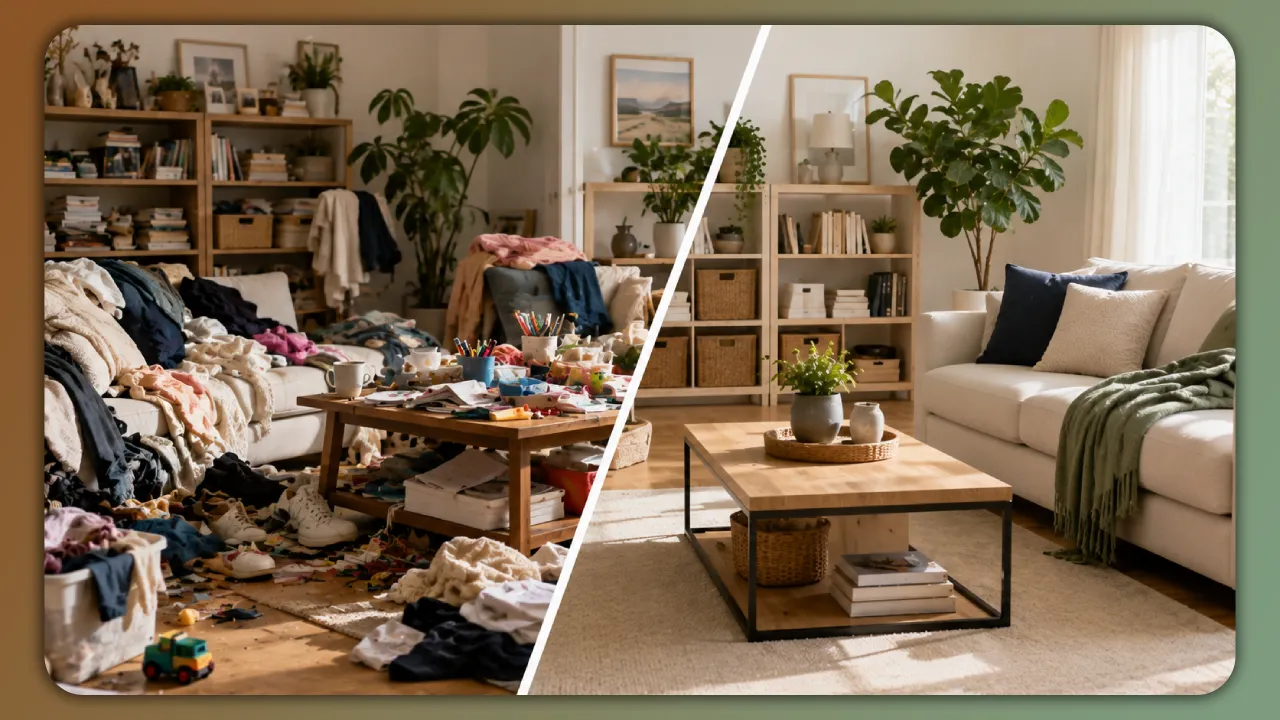
14 Benefits of Decluttering Your Home in 2026
The benefits of decluttering your home include lower stress, better sleep, more free time, and real financial savings. This guide breaks down 14 specific benefits of decluttering, backed by research, plus a task table and direct answers to your top questions.
Home sizes are shrinking in cities across the US, UK, Canada, and Australia, so every square foot matters more in 2026 than in past years. Each benefit below covers a different area of your life: mental health, physical health, money, time, relationships, safety, and long-term lifestyle. You do not need a weekend free or a professional organizer to start seeing results.
How Does Decluttering Improve Your Mental Health?
Decluttering improves your mental health by lowering stress hormones and improving focus. Your brain treats every visible object as an unfinished task, so removing visible items cuts that mental load directly.
Benefit 1: Lower Stress and Cortisol Levels
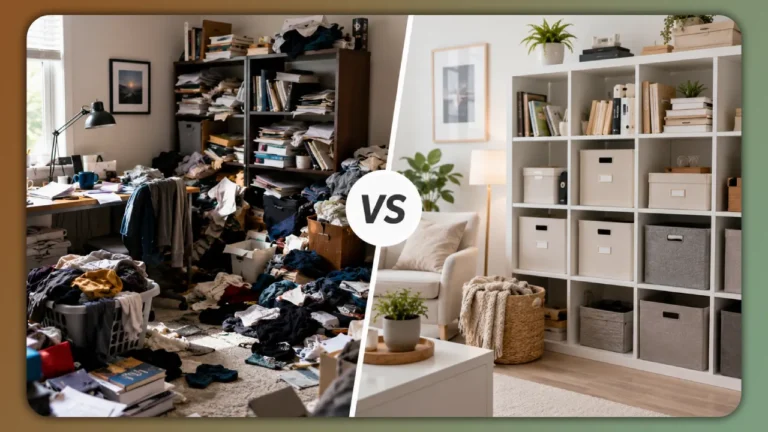
Clutter raises your stress hormone cortisol, according to research published in the Personality and Social Psychology Bulletin. Women who described their homes as cluttered showed higher cortisol levels than women who described their homes as calm. Removing excess items from surfaces (kitchen counters, coffee tables, desks) lowers this stress response within days. A single 20-minute session on your nightstand or counter produces a noticeable shift in how calm the room feels. Repeat this session in 1 more room each week to build a lasting habit.
Benefit 2: Sharper Focus and Concentration
Visual clutter competes for your brain’s attention and reduces working memory. Neuroscience research from Princeton University links a cleared workspace to measurably better task focus. You process information faster in an organized room. Distracting objects (stacks of mail, loose cables, spare chargers) pull your attention away from the task in front of you, and open shelving stacked with random items forces your eyes to scan constantly. A clear desk (1 laptop, 1 notepad, 1 lamp) supports longer stretches of focused work.
What Physical Health Benefits Come From Decluttering?
Decluttering reduces your exposure to allergens and improves your sleep quality. Dust and allergens build up fastest in spots you rarely clean, such as beneath beds and behind furniture.
Benefit 3: Fewer Allergens and Dust Mites
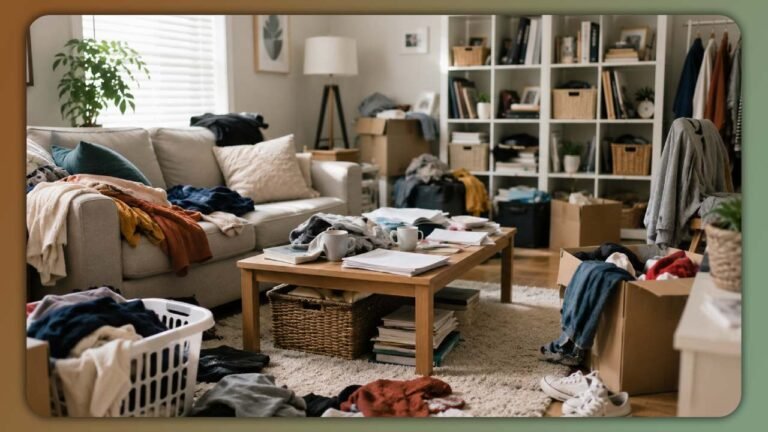
Piles of belongings trap dust mites, pet dander, and mold spores inside fabric and cardboard. Removing clutter cuts the surface area where allergens collect by a measurable margin. You lower your risk of asthma and allergy flare-ups when you clear boxes, old clothing, and stacked papers. Vacuuming and dusting also take a fraction of the time once items no longer block access to floors and shelves. Washing curtains and rugs (fabric surfaces that trap allergens) becomes far easier without stacked boxes in the way.
Benefit 4: Better Sleep Quality
A cluttered bedroom keeps your mind active at bedtime instead of calm. People who keep their bedrooms tidy report better sleep quality than people with cluttered rooms, per National Sleep Foundation survey data. Remove electronics, laundry piles, and paperwork from your bedroom, ideally 6 feet (1.8m) from your bed. A nightstand cleared of chargers, books, and loose papers gives your eyes one less thing to scan before you close them for the night. A made bed and an empty floor (12 square feet (1.1 square meters) or more of visible carpet) signal to your brain that the room is ready for rest.
How Does a Decluttered Home Save You Money?
Decluttering saves you money by curbing impulse purchases and generating resale income. Clutter often represents money you already spent on items you no longer use, wear, or need.
Benefit 5: Reduced Impulse Spending
Seeing what you already own stops you from buying duplicates. Households that complete a full decluttering pass report noticeably lower discretionary spending in the months that follow. You start asking whether an item earns its space before you buy it. Seeing 3 unopened bottles of the same lotion, or 5 identical t-shirts, makes the pattern of unnecessary spending obvious. A 24-hour waiting rule before any non-essential purchase reinforces this new habit.
Benefit 6: Extra Income From Selling Unused Items
Decluttering uncovers items with resale value: electronics, furniture, designer clothing, collectibles. Selling unused items through resale platforms (eBay, Facebook Marketplace, Vinted) can generate hundreds of dollars per decluttering session. You convert forgotten possessions into cash instead of storage costs. A single decluttered closet can surface enough resale items (shoes, handbags, small appliances) to cover a month of grocery costs, and donating unsold items to charity shops (Goodwill, British Heart Foundation, Salvation Army) may qualify for a tax deduction. Photograph and list items within 48 hours of decluttering so momentum does not fade.
How Does Decluttering Boost Productivity and Time Management?
Decluttering shortens the time you spend searching for items and cleaning your home. Cleaning also takes longer when you have to move, sort, or work around excess belongings before you start.
Benefit 7: Faster to Find Items You Need
An organized drawer or cabinet lets you locate what you need in seconds. You cut search time for keys, documents, and tools significantly once every item has one fixed home. Labeled bins, drawer dividers, and closet systems (wire shelving, stackable boxes, hanging organizers) keep this system working long term. A junk drawer sorted into 3 small trays saves repeated searching every single week. A label on each bin (batteries, tools, cables) removes any guesswork for every member of your household.
Benefit 8: More Free Time Each Week
A smaller inventory of possessions takes less time to clean and maintain. You reclaim hours each week once you own fewer items to dust, fold, and put away. That time goes toward hobbies, family, or rest instead of household maintenance. Weekly cleaning tasks like vacuuming, dusting, and tidying can shrink from 2 hours to 45 minutes in a decluttered home. Fewer belongings also means fewer decisions about where to store new purchases as they enter your home.
What Social and Relationship Benefits Does Decluttering Offer?
Decluttering makes your home welcoming and reduces friction with the people who live there. Clutter tends to concentrate in shared rooms (kitchens, living rooms, hallways), which is exactly where friction between household members usually starts.
Benefit 9: A Home Ready for Guests
A tidy home lets you invite people over without a scramble to hide clutter. You spend minutes, not hours, preparing your home for visitors once clutter is under control. Shared spaces (living rooms, kitchens, entryways) stay presentable between deep cleans. You no longer need a 30-minute scramble before someone arrives at your door. Spontaneous visits stop feeling stressful once your main living areas hold a consistent baseline of order.
Benefit 10: Fewer Household Conflicts
Disagreements over mess are a common source of tension between roommates, partners, and family members. Couples and families who declutter shared spaces together report fewer arguments about household mess. You avoid blame cycles when everyone agrees on where items belong. Assigning 1 clear owner to each shared space (kitchen, living room, garage) removes the guesswork over who is responsible for tidying it. A 10-minute reset before bed keeps shared rooms from sliding back into clutter.
How Does Decluttering Increase Home Safety and Efficiency?
Decluttering removes physical hazards and helps your home run more efficiently. Cluttered homes also make emergency evacuation slower during a fire, flood, or other incident.
Benefit 11: Lower Fire and Trip Hazards
Piles of paper, boxes, and loose cords near heaters or outlets increase fire risk. Clear pathways and surfaces reduce trip hazards for children, pets, and older adults. You lower your risk of injury by keeping stairways, hallways, and exits (front door, back door, garage entrance) clear. Fire departments across the US and UK list stacked paper and blocked exits among common household hazards during inspections. A clear 36-inch (91cm) walkway through every room meets standard accessibility guidance for older adults.
Benefit 12: Improved Energy Efficiency
Furniture and boxes stacked against vents, radiators, and windows block airflow. A decluttered home heats and cools more efficiently because air circulates without obstruction. You lower utility bills when heating and cooling systems work as designed instead of fighting blocked vents. Even a 2-inch (5cm) gap of clearance in front of a radiator or vent restores normal airflow. Clear vents also help your thermostat read room temperature accurately instead of a pocket of trapped air.
What Long-Term Lifestyle Benefits Does Decluttering Create?
Decluttering builds confidence and clarifies what matters to you long after the project ends. These benefits compound over months, not days, and tend to outlast the initial burst of motivation that started the project.
Benefit 13: Higher Self-Esteem and Sense of Control
Completing a decluttering project proves you can follow through on a hard task. People who declutter report higher self-esteem and a stronger sense of control over their environment, according to Psychology Today. You carry that confidence into other areas of your life. Finishing even 1 small decluttering project builds momentum toward larger goals elsewhere. Tracking each finished room on a simple checklist reinforces this sense of progress.
Benefit 14: A Clearer Sense of Personal Priorities
Deciding what to keep forces you to define what actually matters to you. You develop a clearer personal style and spending pattern once you identify the items you use and love. This clarity extends beyond your closet into how you spend your time and money. You stop replacing items simply because they are convenient and start choosing pieces (furniture, clothing, kitchenware) that reflect what you value. Reviewing your priorities every 6 months keeps this clarity from fading once the initial project ends.
How to Start Decluttering Your Home Today
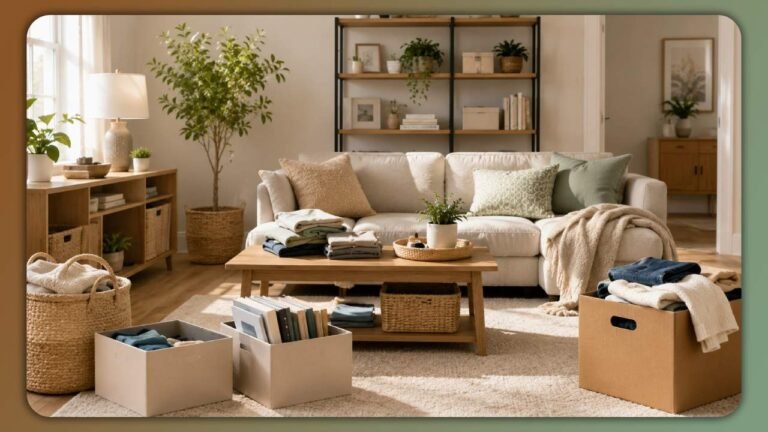
To start decluttering your home today, pick one small area and set a 15-minute timer. Choose a single drawer, shelf, or surface (kitchen counter, bathroom cabinet, nightstand) instead of an entire room. Sort every item into 4 categories: keep, donate, sell, and discard. Handle each item only once instead of moving it between piles, since repeated handling slows down the entire process.
Feeling stuck before you even begin is common. Learn where to start when overwhelmed so the first 15 minutes feel manageable instead of impossible.
Storage products are not required before you begin. You can skip buying storage products and use containers you already own until you know exactly what you are keeping.
Not sure which room needs attention first? Learn to recognize decluttering warning signs: overflowing closets, surfaces you cannot see, and items you have not touched in 12 months.
Set a repeatable schedule instead of a single event. Block 15 minutes on 3 days each week (Monday, Wednesday, Saturday) until you finish every room in your home. Consistent short sessions produce lasting results better than 1 exhausting weekend.
Quick-Reference Table for the Benefits of Decluttering
This table breaks down 6 common decluttering tasks by time, method, and difficulty so you can plan a realistic session. Pick 1 task that matches the time you have free today, and complete it before moving to the next one.
| Task | Time Needed | Method | Difficulty |
| Kitchen counters | 15 minutes | Sort and wipe | Easy |
| Clothes closet | 1 hour | Four-Box Method | Medium |
| Bathroom cabinet | 20 minutes | Expiry check | Easy |
| Garage or shed | 3 hours | Category sort | Hard |
| Paperwork and mail | 45 minutes | File or shred | Medium |
| Kids’ toy bins | 30 minutes | KonMari Method | Medium |
Frequently Asked Questions About the Benefits of Decluttering
Does decluttering really reduce stress?
Yes. Research links cluttered homes to higher cortisol levels and lower reported wellbeing, and clearing even 1 room produces a measurable drop in stress. A single evening spent clearing 1 space can lower how anxious that room makes you feel.
How long does it take to see the benefits of decluttering?
Most people notice lower stress and sharper focus within 1 week of clearing a single room or surface. Full-home projects typically take 4 to 8 weekends depending on how much you own.
Is decluttering good for your mental health?
Yes. Decluttering increases self-esteem, reduces anxiety, and improves your sense of control over your environment. Many people also report fewer symptoms linked to low mood once their main living spaces stay clear.
Can decluttering save you money?
Yes. Decluttering reduces impulse spending and generates income through resale platforms and donation tax deductions. Many households save $50 to $200 (£40 to £160) per month once impulse purchases drop.
What is the best method for decluttering a whole house?
The Four-Box Method (keep, donate, sell, discard) works room by room and prevents decision fatigue across a full house. Work through 1 room at a time instead of switching between multiple rooms in a single session.
Start Enjoying the Benefits of Decluttering This Week
The benefits of decluttering your home reach far beyond a tidy living room. You gain lower stress, better sleep, extra money, and more free time from a single ongoing habit. Every hour you invest in decluttering pays back in time, money, and calm for months afterward. None of the 14 benefits above require a large budget or a full weekend to begin. Start with one drawer, one shelf, or one countertop today, then build from there. Ready for more room-by-room guidance? Explore more decluttering guides on Space Keep and turn this week into your first decluttered room.