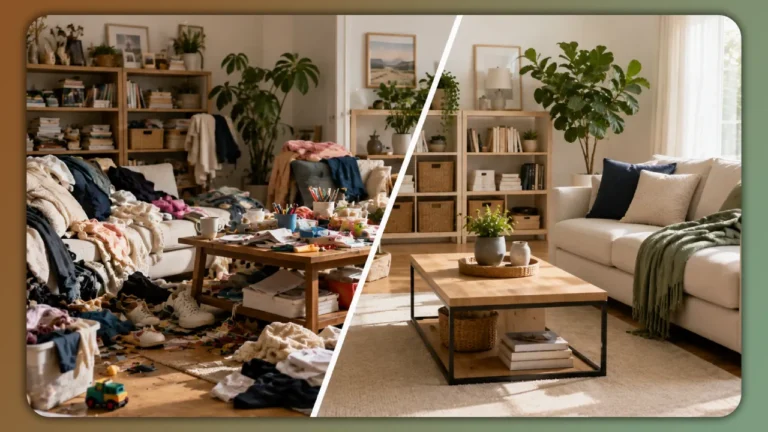
How to Declutter Your Home: A Complete Guide (2026)
To declutter your home, remove items you no longer need or use, sort what remains by category, and give every item you keep one fixed place. This guide covers the fastest decluttering methods for 2026, a full room-by-room plan for the kitchen, bedroom, bathroom, living room, entryway, and home office, and the exact mistakes that send most people back to a cluttered house within weeks.
A cluttered home affects more than storage space. Researchers at the Princeton University Neuroscience Institute found that visual clutter competes for the brain’s limited attention, forcing it to work harder to filter out objects it doesn’t need. A separate study from UCLA’s Center on Everyday Lives of Families linked cluttered homes to higher cortisol, the body’s primary stress hormone, in the people living in them. Decluttering your home changes how your brain processes the space you live in, not just how the space looks.
This guide applies whether you’re organising a small flat in the UK, a suburban house in the US, or a condo in Canada. The rooms, the clutter triggers, and the methods below stay the same across all 3; only the donation and recycling routes at the end of the process change by country.
What Decluttering Your Home Actually Means
Decluttering removes items you no longer need, want, or use. Organising arranges the items you decide to keep into a system that fits your daily routine. People often use the two words as if they mean the same thing, but they solve different problems, and mixing them up is why so many decluttering projects stall halfway through a room.
Declutter first, then organise. Buy storage bins, dividers, or baskets before you declutter, and you’ll end up organising items you should have thrown out, wasting both money and space. See the full breakdown in Decluttering vs Organising to see how each stage fits into a working home system.
How to Start Decluttering When You’re Overwhelmed
Pick one small, visible spot, such as a single drawer or shelf, and work there for 15 minutes if the size of the whole house is what’s stopping you from starting. Small, finished wins build the momentum a full-house declutter needs. Trying to plan the entire project before you start is the single biggest reason people never start at all.
3 signs decluttering has become urgent rather than optional:
- You can’t locate an item you own within 2 or 3 minutes of looking for it.
- Flat surfaces such as countertops and tables refill within a day of being cleared.
- Guests change rooms because one space is too full to use comfortably.
For the complete list, read 10 Signs of Declutter Your Home, and for a step-by-step starting plan built for exactly this situation, see Where to Start Decluttering.
The Best Decluttering Methods to Try in 2026
Pick one method and finish a full room with it before switching to another, since mixing methods mid-project is the most common reason a declutter loses momentum. 6 methods cover most homes, schedules, and personality types.
- One Bag a Day: Fill one bag with items to donate or discard every day until the whole house is covered. This method suits slow, steady progress across a busy month rather than one intense weekend.
- The 4D Method: Sort every item into 4 boxes: do, ditch, delegate, or defer. Items in the ditch box go straight to recycling or rubbish, while items in the defer box wait in temporary storage until you decide.
- The 12-12-12 Method: Find 12 items to throw away, 12 to donate, and 12 to return to their correct place in a single session. This method works well for one room in under an hour.
- The Boundary Method: Set a fixed physical limit, such as one drawer or one shelf, for a category of items. Anything that doesn’t fit inside that boundary gets removed, which stops the category from expanding again.
- The Snowball Method: Declutter one item using a clear reason, then apply the same reason to every similar item in the house. This method speeds up once you’ve made the first hard decision.
- The KonMari Method: Handle each item and keep only what serves you, a method popularised by organising consultant Marie Kondo. This method suits an emotional reset more than a pure storage-space fix.
How to Declutter Your Home Room by Room
Work through each room using its specific trouble spots rather than one house-wide approach, since a kitchen and a bedroom collect clutter in different ways. Below is a starting checklist for the 6 rooms that generate the most household clutter.
Kitchen
Clear out expired food first. Check use-by dates on everything in the fridge, freezer, and cabinets, then bin anything past its date. Group remaining appliances by how often you use them, and move any appliance you haven’t used in the last 6 months to a higher cabinet or out of the kitchen entirely.
Bedroom
Empty every drawer onto the bed so you can see the full volume of what you own, then sort by category rather than by drawer. Donate or sell any clothing item you haven’t worn in the last 12 months, with an exception for formal wear you only wear once or twice a year.
Bathroom
Combine half-used bottles of the same product into one container to free up shelf space immediately. Keep 2 to 3 bath towels per household member, plus one spare set for guests, and donate or recycle anything beyond that.
Living Room
Limit throw blankets to 1, or 2 at most, per sofa, and remove any decorative cushion that no longer matches your current colour scheme. Sort cables and remotes into a single labelled box near the media unit so surfaces stay usable day to day.
Entryway
Remove everything from the floor first, since bags, shoes, and loose post are the most common causes of a cluttered entryway. Keep only coats and shoes for the current season within reach, and move off-season items to a closet or under-bed storage.
Home Office
Sort paperwork into 3 categories: keep permanently (contracts, certificates, tax records), keep temporarily (current bills, active projects), and shred. Label your remaining files clearly so you can retrieve a document in seconds, not minutes. Empty the desk of pens, cables, and stationery that no longer work, and keep only enough of each to fill one drawer or organiser tray.
Browse the full Room by Room library for layouts built for small spaces, shared rooms, and rentals, and once a space is decluttered, the 35 Home Decor Ideas for Every Room guide covers how to style the space you’ve freed up.
What to Do With the Things You Declutter
Sort everything you remove into 4 groups: donate, sell, recycle, or bin, and decide the group before the item leaves the room. Deciding the destination in the moment, rather than piling everything into one vague box, is what turns a declutter into finished bags instead of clutter that has simply moved to the hallway.
- Donate: Charity shops take clothing, books, kitchenware, and small furniture in good condition; many, including the British Heart Foundation, offer free collection for larger items.
- Sell: Marketplace apps work well for furniture and electronics, while clothing does better on resale platforms built for fashion.
- Recycle: Textiles, batteries, and electronics usually need a specific drop-off point rather than the household recycling bin, since standard collections often reject them.
- Bin: Reserve this for items that are broken, incomplete, or unsafe to pass on, such as expired medication or damaged electricals.
Get the donation and sale bags out of the house within 48 hours of finishing a room. Bags left by the front door for weeks tend to get raided for “maybes,” which undoes the decision you already made.
How to Declutter Your Home With Family or Housemates
Assign each person responsibility for their own belongings, and only declutter shared spaces, such as the kitchen or living room, together. Decluttering another adult’s things without asking causes conflict and rarely lasts, since items tend to reappear once trust breaks down.
For children’s rooms, work by age rather than by category. Start with the oldest child’s space first, since outgrown clothes, toys, and books can be boxed and labelled for a younger sibling instead of leaving the house entirely. Rotating toys, keeping only a portion out at once, and swapping them periodically also reduces the clutter a child’s room accumulates between full declutters.
How to Declutter Your Home Without Buying Storage First
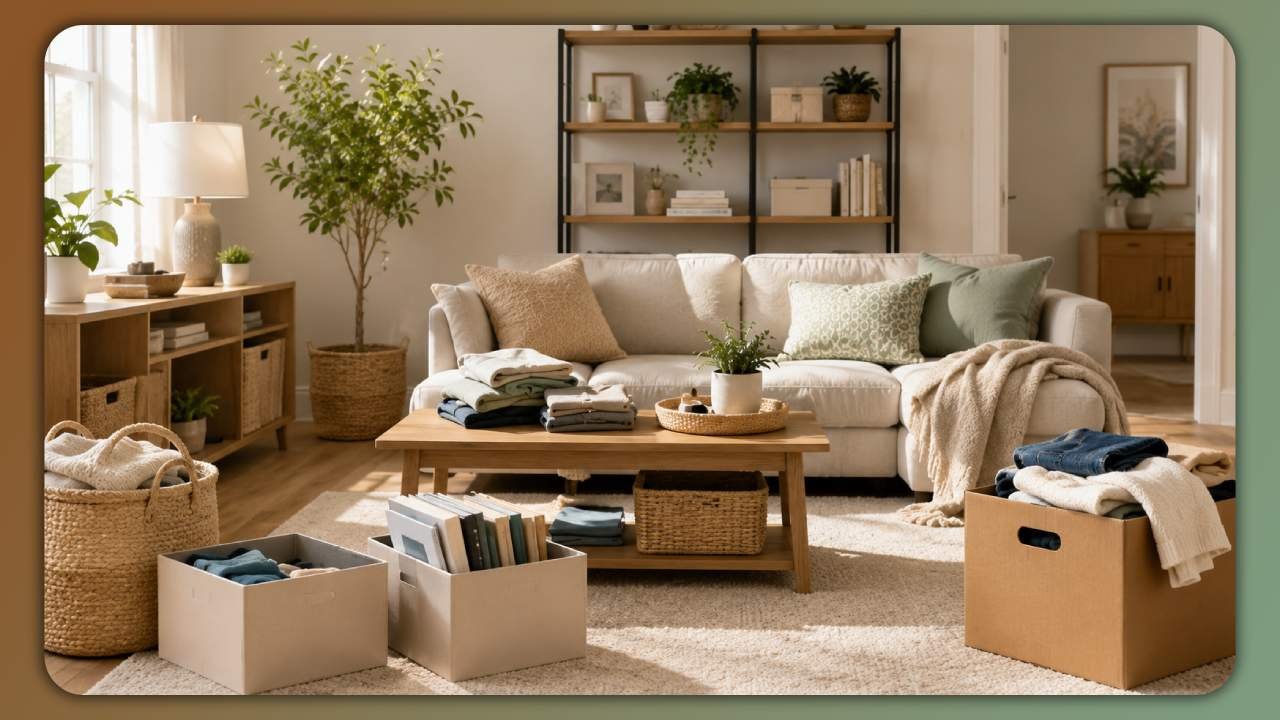
Sort your belongings before you buy a single storage product, since decluttering after buying storage means organising items you never needed to keep. Use containers, boxes, and bags you already own for the sorting stage, and shop for permanent storage only once you know exactly how much you’re keeping and what shape it needs to fit.
This order also prevents a common, expensive mistake: buying storage that matches the clutter instead of the space left once the clutter is gone. The full method, including which household items double as free sorting containers, is in How to Declutter Without Buying Any Storage Products First.
How to Keep Your Home Clutter-Free After You Declutter
Apply the one-in-one-out rule: remove one item from the house for every new item you bring in, if you want the results of a declutter to last past the first month. This single habit prevents most of the regrowth that undoes a full-house declutter within a year.
Build 2 short routines into your week:
- A 15-minute nightly reset: return stray items to their assigned home before bed.
- A seasonal mini-declutter: revisit each room for 30 to 60 minutes every 3 months to catch anything that’s crept back in.
Seasonal changes are a natural trigger for a mini-declutter. Swapping summer clothes for winter ones, packing away holiday decorations, or clearing out schoolwork at the end of a term are all moments when clutter is already visible and easy to sort, so use them instead of waiting for a dedicated weekend.
Browse Home Systems & Routines for daily and weekly systems built around these habits.
Benefits of Decluttering Your Home
Decluttering reduces the amount of visual information your brain has to process at once, freeing up mental bandwidth for other tasks. It also cuts the time spent searching for items, reduces duplicate purchases, and creates usable space without moving house or renovating.
A decluttered home also makes routine cleaning faster, since fewer objects means fewer surfaces to move and wipe around each time. For a complete list covering time, money, health, and relationships, read 14 Benefits of Decluttering Your Home in 2026.
Common Decluttering Mistakes to Avoid
Avoid these 5 mistakes, since each one is a common reason people abandon a declutter partway through or watch the clutter return within months. Most of them come from rushing the sorting stage instead of trusting the process.
- Buying storage before sorting: This locks you into organising items you should have removed in the first place.
- Keeping a “maybe” box indefinitely: Set a 30-day limit; if you haven’t needed the contents by then, donate or discard them.
- Decluttering someone else’s belongings without asking: This causes conflict and rarely produces lasting results.
- Trying to finish the whole house in one weekend: This leads to burnout and half-finished rooms; short, repeatable sessions work better.
- Skipping the category step for wardrobes and books: Sorting room by room instead of category by category hides duplicates you’d otherwise spot immediately.
Frequently Asked Questions (FAQs)
Is decluttering good for your mental health?
Yes, decluttering is linked to lower stress and better focus. Research from the Princeton University Neuroscience Institute found that visual clutter competes for the brain’s attention, while a UCLA study linked cluttered homes to higher cortisol levels in the people living in them.
Should you declutter room by room or by category?
Declutter by category for items spread across multiple rooms, such as clothing, books, or paperwork, and by room for everything else. Category sorting reveals duplicates that room-by-room sorting hides, since you can compare every item in one group side by side.
How long does it take to declutter a house?
A single room typically takes 2 to 4 hours, and a full 3-bedroom house takes 20 to 30 hours spread across several weeks, if you’re working alone in short sessions. That timeline shortens significantly with a second person helping.
Do you need to buy storage before you declutter?
No, buying storage before you declutter usually means organising items you should have removed. Sort and remove first, then buy storage sized to what’s actually left.
Is decluttering the same as organising?
No, decluttering removes items you no longer need, while organising arranges the items you keep into a working system. Decluttering always comes first, since organising clutter simply hides it more neatly.
Can decluttering save you money?
Yes, decluttering cuts duplicate purchases because you can see exactly what you already own, and it can generate cash through selling unwanted items. It also reduces the amount of storage space you need to rent or build.
What is the fastest way to declutter a house?
The fastest way to declutter a house is the 12-12-12 method: find 12 items to throw away, 12 to donate, and 12 to return to their correct place in a single session. Repeating this target across each room clears a house faster than working without a set number in mind, and the fixed numbers stop the second-guessing that slows most people down.
Final Thoughts
Decluttering your home comes down to 3 repeatable steps: remove what you don’t need, sort what’s left by category, and give every remaining item a fixed home. Start with one drawer or shelf today, apply one of the methods above, and build the one-in-one-out rule into your routine so the results last. For more room-specific guides and storage systems, browse the Decluttering and Storage & Simple Living categories on Space Keep.