50 Living Room Ideas to Elevate Your Space in 2026
The best living room ideas balance color, layout, furniture, and decor to build a space that looks polished and still holds up to daily use.
Whether you call it a lounge, a sitting room, or a front room, this room carries more foot traffic than almost any other space in the home.
Good living room ideas solve three problems at once: color that dates fast, furniture that ignores the room’s shape, and decor that photographs well but doesn’t function day to day.
This guide covers living room ideas for small spaces, tight budgets, and every design style, so you can update your living room without guesswork in 2026.
Every idea below works for UK terraces, US ranch homes, and Canadian condos alike, and each section links to a deeper guide on spacekeep.co.uk for the next step.
Living Room Color Ideas
Color sets the mood of a living room before furniture or decor does. Warm neutrals, deep jewel tones, and high-contrast pairings each create a different feeling, so pick a palette based on how the room needs to function, not just how it looks in photos.
- Warm neutrals for a calm base: Terracotta, warm beige, and soft taupe create a grounded feel and pair with almost any furniture style.
- Color drenching for a cocooning effect: Painting the walls, trim, and ceiling one hue removes visual breaks and makes small rooms feel intentional rather than cramped.
- High-contrast pairings for drama: Navy and mustard, or black and white, add energy when balanced with a neutral sofa and a plain rug.
- Dark tones with warm accents: Charcoal or forest green walls work well if you add brass, wood, or warm lighting to stop the room from feeling closed in.
- Earthy palettes for a natural look: Clay, olive, and rust tones suit living rooms with large windows or exposed wood beams.
- Two-tone drenching for added depth: Pair two related shades, such as sage and moss, across walls and trim for a scheme with more dimension than a single flat color.
Stick to three main colors in a living room: one neutral base, one secondary tone, and one accent color for cushions, art, or accessories. Rooms with more than three dominant hues tend to look unplanned rather than curated.
Living Room Layout Ideas
A living room layout works when the seating faces a shared focal point instead of just the television. Plan the layout before buying furniture, because a sofa that fits a showroom floor rarely fits an actual room.
- Conversation zones: Pull the sofa away from the wall and angle chairs toward a coffee table to build a space designed for talking, not only viewing.
- Multi-functional zoning: Split a long living room into two areas, such as a seating zone and a reading corner, using a rug or a low bookshelf as the divider.
- Broken-plan layouts: Use partial walls, glazed partitions, or open shelving to separate a living room from a kitchen or hallway without closing it off completely.
- Awkward corner solutions: Turn a bay window into a window seat, or fit a slim bookcase into a dead corner instead of leaving it empty.
- TV placement: Position the television off-center or inside built-in cabinetry so it doesn’t dominate every sightline in the room.
- Symmetry and asymmetry: Flank a sofa with matching side tables for a calm, formal feel, or mix furniture shapes and sizes for a more dynamic, lived-in look.
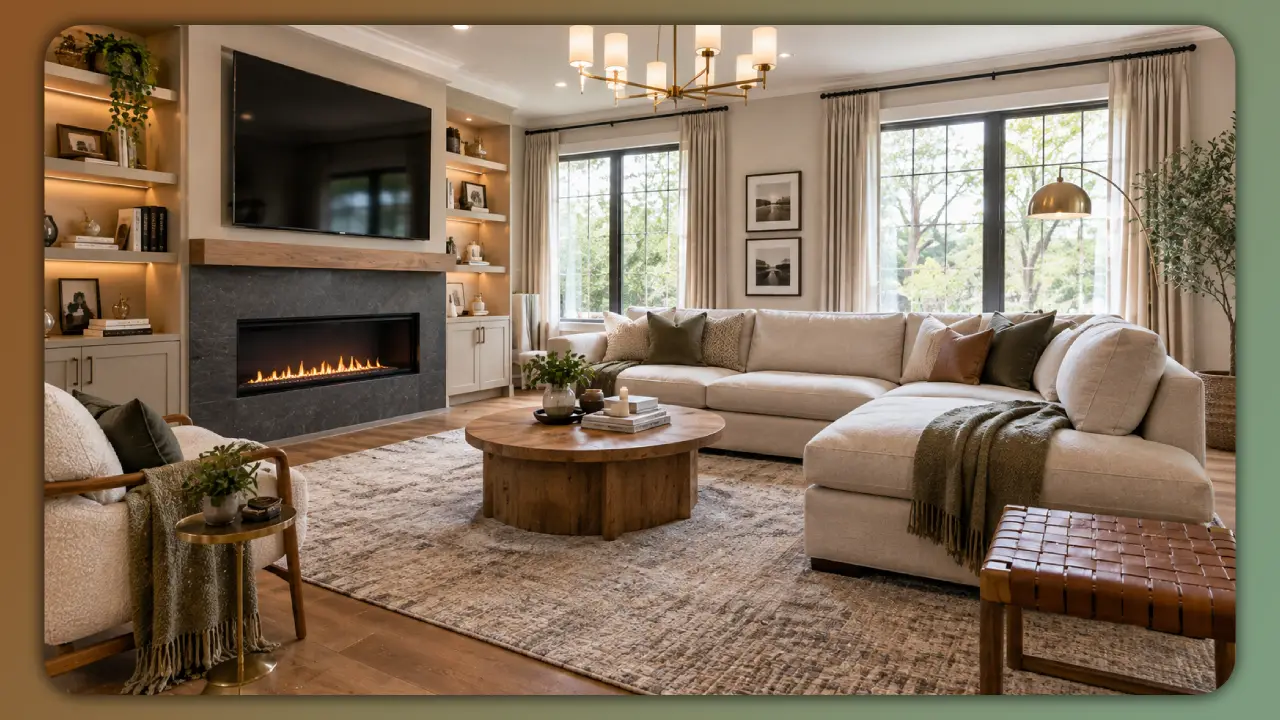
If a living room measures under 150 square feet (14 square meters), choose a sectional with a chaise instead of a sofa plus two armchairs. Fewer, larger pieces read as more organized than several small ones scattered around a small footprint.
Living Room Decor Ideas
Decor finishes a living room once you’ve set the color and layout. Layer at least three textures, such as a wool rug, linen curtains, and a leather chair, to avoid a flat, showroom look.
- Statement lighting: A sculptural pendant or chandelier works as a focal point in rooms with ceilings above 9 feet (2.7 meters), while a floor lamp suits standard 8-foot ceilings.
- Layered lighting: Combine ceiling lights, table lamps, and accent lighting instead of relying on one overhead fixture for the whole room.
- Rugs: Size the rug so the front legs of every sofa and chair sit on it. This anchors the seating area instead of leaving it floating on bare floor.
- Wall art and gallery walls: Group three to five framed pieces of varied sizes for a gallery wall that reads as curated rather than random.
- Greenery: A tall floor plant, such as a fiddle leaf fig or a money tree, adds height and softens the hard lines of sofas and shelving.
- Pattern and texture: Introduce pattern through cushions and throws first, since textiles cost less to change than upholstery or wallpaper.
- Mirrors: Hang a large mirror opposite a window to bounce natural light around rooms that face north or receive limited sun.
Choose one focal point per wall. A room with a feature fireplace, a gallery wall, and a patterned rug all competing for attention ends up feeling busy instead of styled. Add one new decor layer every few weeks instead of all at once, so you can judge whether each piece earns its place before committing to the next.
Living Room Furniture Ideas
Furniture should match a room’s proportions before it matches a trend. A large sectional overwhelms a small room, and two small armchairs get lost in a large one.
- Sofa scale: Measure doorways and staircases before ordering a sofa. A piece that doesn’t fit through the entrance is the most common furniture-buying mistake.
- Custom upholstery: A custom sofa or armchair costs more upfront but lasts longer and fits the room’s exact dimensions.
- Vintage and secondhand pieces: A reupholstered vintage sofa or a refinished coffee table adds character at a lower cost than new custom furniture.
- Storage furniture: An ottoman with hidden storage, a console with drawers, or floor-to-ceiling built-ins keep clutter out of sight in small living rooms.
- Wall-mounted media units: Replace a bulky media console with a wall-mounted shelf or a hidden TV cabinet to free up floor space for seating.
Leave 30 to 36 inches (76 to 91 centimeters) of walking space between furniture pieces. Anything tighter makes a living room feel cramped even if the furniture itself is the right size for the room.
Small Living Room Ideas
Small living rooms need furniture that serves two purposes and a color scheme that avoids visual breaks. If your living room measures under 200 square feet (19 square meters), these five changes make the biggest difference.
- Choose a low-profile sofa to keep sightlines open across the room.
- Paint the walls, trim, and ceiling the same light color to remove the visual stop that a contrasting ceiling creates.
- Replace a single coffee table with two nesting tables that tuck away when not in use.
- Hang curtains close to the ceiling, not just above the window frame, to draw the eye upward and add height.
- Use one large rug instead of a small one. An undersized rug makes a small room look more cramped, not less.
A small sitting room benefits from multi-functional furniture, such as a storage ottoman that doubles as a coffee table or extra seating when guests visit.
Budget Living Room Ideas
A living room update doesn’t require new furniture. Most budget living room ideas focus on paint, textiles, and rearranging what you already own.
- Repaint one accent wall instead of the whole room to change the mood for under 50 GBP (65 USD).
- Restyle existing bookshelves by grouping books by color or stacking them horizontally with small objects on top.
- Swap the hardware on media units and side tables for an inexpensive, high-impact update.
- Move furniture into a new layout before buying anything. A fresh arrangement often solves a boring room for free.
- Add secondhand accessories, such as vintage lamps, ceramics, or mirrors, from local marketplaces and charity shops.
A full budget refresh through paint, restyled shelves, and secondhand accessories typically costs under 300 GBP (380 USD), compared with 3,000 GBP (3,800 USD) or more for a full furniture replacement.
Living Room Wall Ideas
Walls carry more design weight in a living room than any other surface, since they’re visible from every seat in the room.
- Wall paneling: Wainscoting or board-and-batten paneling adds texture and works well in new-build living rooms that lack architectural detail.
- Feature walls: A single wall in a bold paint color or wallpaper creates impact without the cost of covering the whole room.
- Wallpapered nooks: Wallpapering the back of a bookshelf or an alcove adds pattern using a fraction of the paper a full wall would need.
- Picture rails and molding: Crown molding, chair rails, or picture rails give a plain living room a sense of period character.
Match wall treatments to the room’s ceiling height. Vertical paneling or striped wallpaper makes a low-ceilinged living room feel taller, while horizontal detailing suits rooms with height to spare.
Interior Design Lounge Room Ideas by Style
Interior design styles for a living room range from minimalist to maximalist, and picking one keeps a room’s decor cohesive instead of scattered.
- Modern living rooms: Clean lines, neutral palettes, and minimal ornamentation define this style. A modern living room design pairs well with wall-mounted storage and geometric lighting.
- Transitional living rooms: A mix of traditional shapes with modern materials, such as a curved sofa paired with a glass coffee table.
- Quiet luxury living rooms: Linen, wood, and stone finishes replace bold patterns, aiming for understated but expensive-looking materials over logos or trends.
- Maximalist living rooms: Layered pattern, bold wallpaper, and pattern-drenched textiles suit collectors and anyone who prefers a busier scheme.
- Coastal living rooms: Pale blues, rattan textures, and natural fiber rugs create a relaxed, beach-adjacent feel that suits sitting rooms with plenty of natural light.
For a full breakdown of each design direction and how to mix them, see our complete guide to types of interior design styles.
Lounge, Sitting Room, or Front Room: Does the Name Change the Ideas?
A lounge, a sitting room, a front room, and a living room describe the same space in different regions, and living room ideas apply equally to all four names.
- UK homes: The terms lounge and sitting room are common in the UK, and living hall decoration ideas often overlap with hallway-adjacent open-plan lounges.
- US homes: Living room is the standard term, though front room is still used in older row houses and townhomes.
- Canadian homes: Living room and family room are used interchangeably, with the family room often serving as the more casual, second seating space.
- Formal versus casual: A front room or formal sitting room typically uses more delicate furniture and less TV-focused layout than a family-style living room.
Whichever term your household uses, the same core decisions apply: color, layout, furniture scale, and decor. Regional naming changes the vocabulary, not the design logic.
2026 Living Room Trends to Know
A handful of trends are shaping living room design in 2026, building on the color, layout, and decor ideas covered above.
- Rattan and natural fiber: Rattan chairs, woven pendant shades, and jute rugs bring texture into a living room without adding pattern or strong color.
- Biophilic design: Living rooms are incorporating more plants, natural light, and organic materials like wood and stone to connect the space to the outdoors.
- Sunken living rooms: Conversation pits and sunken seating areas are returning in renovations and new builds, creating a defined zone without walls.
- Newstalgia: A mix of nostalgic 1970s and 1990s shapes, such as curved sofas and checkerboard patterns, reworked with current, muted color palettes.
Treat trends as accents rather than the full scheme. A rattan pendant light or a sunken seating nook works best layered onto the timeless color and layout choices covered earlier in this guide.
Keep Planning Your Space
This guide is part of our Interior Design Ideas category. For the full breakdown of design directions mentioned above, read our guide to types of interior design styles, and for ideas beyond the living room, see 35 Home Decor Ideas for Every Room in 2026. If storage furniture solved a problem for you here, our home organization hacks guide covers the rest of the house. Browse every room at once in our Room by Room category, or head to Storage & Simple Living for more on keeping the finished room clutter-free.
For general color trend research, Pantone’s Color of the Year is a useful outside reference point, and the U.S. Department of Energy’s lighting guide is a solid resource for choosing energy-efficient layered lighting.
Final Thoughts
A living room comes together through five decisions: color, layout, furniture scale, decor layering, and a defined style. Work through them in that order, and even a small budget produces a living room that looks planned rather than assembled piece by piece. Start with one section of this guide, such as color or layout, finish that decision fully, and move to the next rather than changing five things in the room at once.
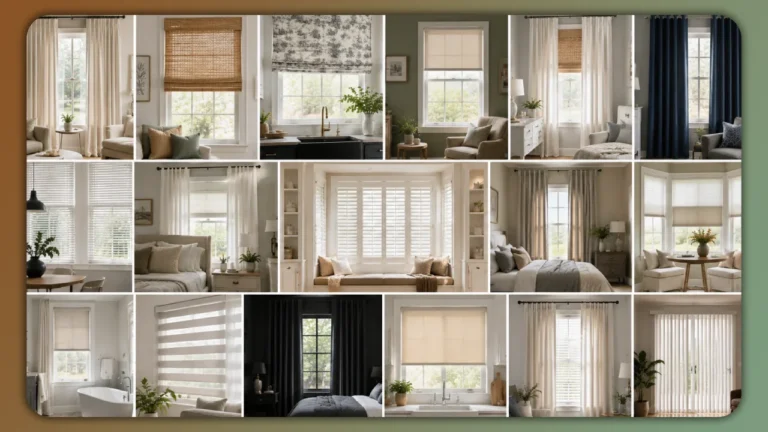
Half-finished changes across every category are the main reason a living room refresh stalls partway through. For more room-specific guidance, browse our Room by Room and Home Decor Ideas categories, or check our Storage & Simple Living section for help keeping the finished room clutter-free. Our guide to organization hacks also pairs well with the storage furniture ideas covered above, and our window treatment guide expands on the curtain and lighting tips from the small living room section.
Frequently Asked Questions
What is the most popular living room color for 2026?
Warm neutrals such as terracotta and warm beige remain the most popular living room colors for 2026, though high-contrast pairings like navy and mustard are gaining ground for accent walls.
How do I make a small living room look bigger?
Paint the walls, trim, and ceiling one light color, hang curtains near the ceiling, and choose a low-profile sofa. These three changes open up sightlines in a small living room more than any single piece of furniture.
Should a rug go under the sofa in a living room?
Yes. The front legs of the sofa and chairs should sit on the rug, since a rug that only fits under the coffee table looks disconnected from the seating around it.
Is a sectional sofa a good choice for a small living room?
Yes, if it includes a chaise instead of a full L-shape. A compact sectional seats more people than two armchairs while using less floor space overall.
How much does it cost to redecorate a living room on a budget?
A budget living room refresh through paint, restyled shelves, and secondhand accessories typically costs under 300 GBP (380 USD), compared to 3,000 GBP (3,800 USD) or more for a full furniture replacement.
What lighting works best in a living room with no overhead fixture?
Layered floor lamps, table lamps, and picture lights work best in a living room without an overhead fixture, since they replace one light source with several smaller, adjustable ones.
How many colors should a living room have?
A living room works best with three main colors: one neutral base, one secondary tone, and one accent color used for cushions, art, or small accessories.