How to Declutter a Bedroom in One Weekend (2026 Guide)
You declutter a bedroom in one weekend by clearing every surface on Saturday, then sorting and resetting on Sunday. This method removes clutter from your closet, dresser, nightstand, and floor in just 2 days.
Most bedrooms take 8 to 10 hours total, split evenly across 2 days. This guide gives you the schedule, tools, and decision rules to declutter your bedroom in one weekend without stalling.
Why a Decluttered Bedroom Improves Sleep and Daily Routine
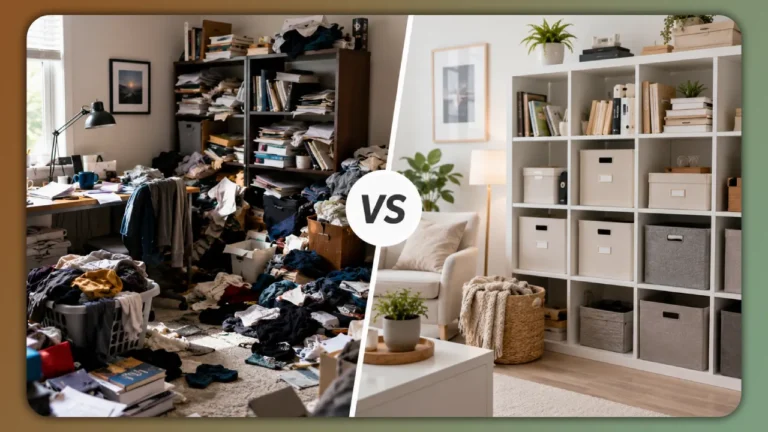
A cluttered bedroom raises visual noise, and visual noise keeps your brain scanning the room instead of winding down. Researchers studying home environments link excess visible objects to higher reported stress before bedtime.
A decluttered bedroom shortens your morning routine because you locate clothing, chargers, and accessories in seconds instead of minutes. Fewer decisions at 7am mean more time for breakfast, exercise, or an extra 10 minutes of sleep. The weekend method below targets these 3 zones directly: the closet, the surfaces, and the floor.
Renters and homeowners both benefit from this method, since none of the 7 steps below require permanent fixtures. Every solution here uses freestanding bins, hangers, and boxes that move with you between homes.
What You Need Before You Start Your Weekend Declutter
You need 5 items before you touch a single drawer: donation boxes, trash bags, storage bins, labels, and a timer. Gathering supplies first prevents mid-task trips to the shop that break your momentum. A single trip to buy a missing box can cost you 30 minutes of a tight Saturday schedule.
5 Supplies to Gather First
Collect these items and place them inside your bedroom door before Saturday morning:
- Donation boxes: 2 medium boxes, 45cm x 30cm (18in x 12in)
- Trash bags: contractor-strength bags, 113 litres (30 gallons)
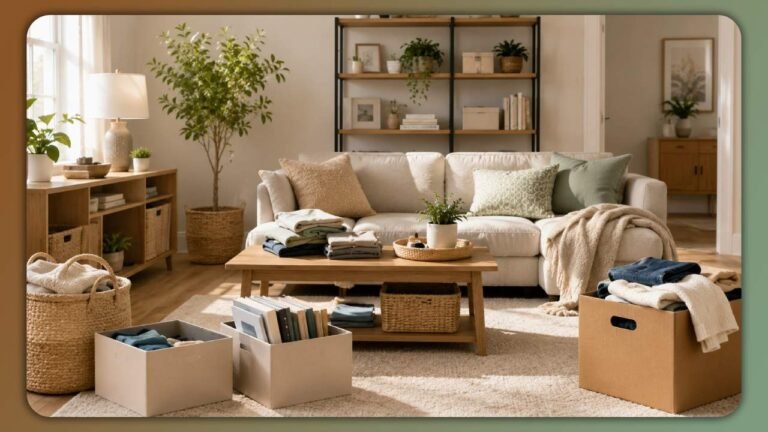
- Storage bins: clear plastic bins with lids for under-bed and closet use
- Labels: sticky labels or masking tape and a marker
- Timer: a phone timer or a kitchen timer for 45-minute work blocks
Buying storage before you sort wastes money on bins you may not need. You can declutter without buying storage products at all during the first pass, then shop only for what remains.
Gather 1 extra supply many guides skip: a laundry basket for items that belong in other rooms. A separate basket for Relocate items stops you from carrying single objects across the house repeatedly.
How to Set a Goal for Your Space
To set a goal for your space, choose 3 words that describe how you want the room to feel. Common choices include calm, spacious, and cozy. Write these words on a sticky note and place it on your mirror. Every decision during the weekend should support that feeling, not fight it.
How to Plan Your Two-Day Declutter Schedule
You plan a two-day declutter schedule by assigning clearing and sorting to Saturday and closet work plus reset to Sunday. Saturday covers surfaces, drawers, and the 4-box sort. Sunday covers clothes, nightstand, under-bed storage, and final styling.
Splitting the work this way prevents decision fatigue. Trying to do both days in a single 10-hour session leaves you exhausted by hour 4. Exhaustion leads to rushed keep decisions you regret later.
A sample hour-by-hour schedule looks like this:
- Saturday, 9am to 10am: Clear every surface into a holding pile
- Saturday, 10am to 1pm: Sort using the 4-box method
- Saturday, 5pm: Load the Donate box into your car
- Sunday, 9am to 12pm: Sort and fold clothes using the 3-second rule
- Sunday, 1pm to 2pm: Organize the nightstand and under-bed bins
- Sunday, 2pm to 3pm: Vacuum, wipe surfaces, and style the room
Adjust each block by 30 minutes if your room exceeds 14 square metres (150 square feet). Larger rooms and more clothing volume both add time.
How to Clear Every Surface First (Saturday Morning)
To clear every surface first, remove every object from the bed, nightstand, dresser top, and floor within 60 minutes. Place everything into a single pile in the hallway or on a bare section of carpet.
Clearing surfaces before sorting gives you a blank room to work in. A blank room makes sorting faster because you see the true size of the job, not a guess.
Open 2 windows for 15 minutes while you clear the room. Fresh air reduces dust triggers during the next few hours of handling old fabric and paper.
How to Sort Items Using the 4-Box Method (Saturday Afternoon)
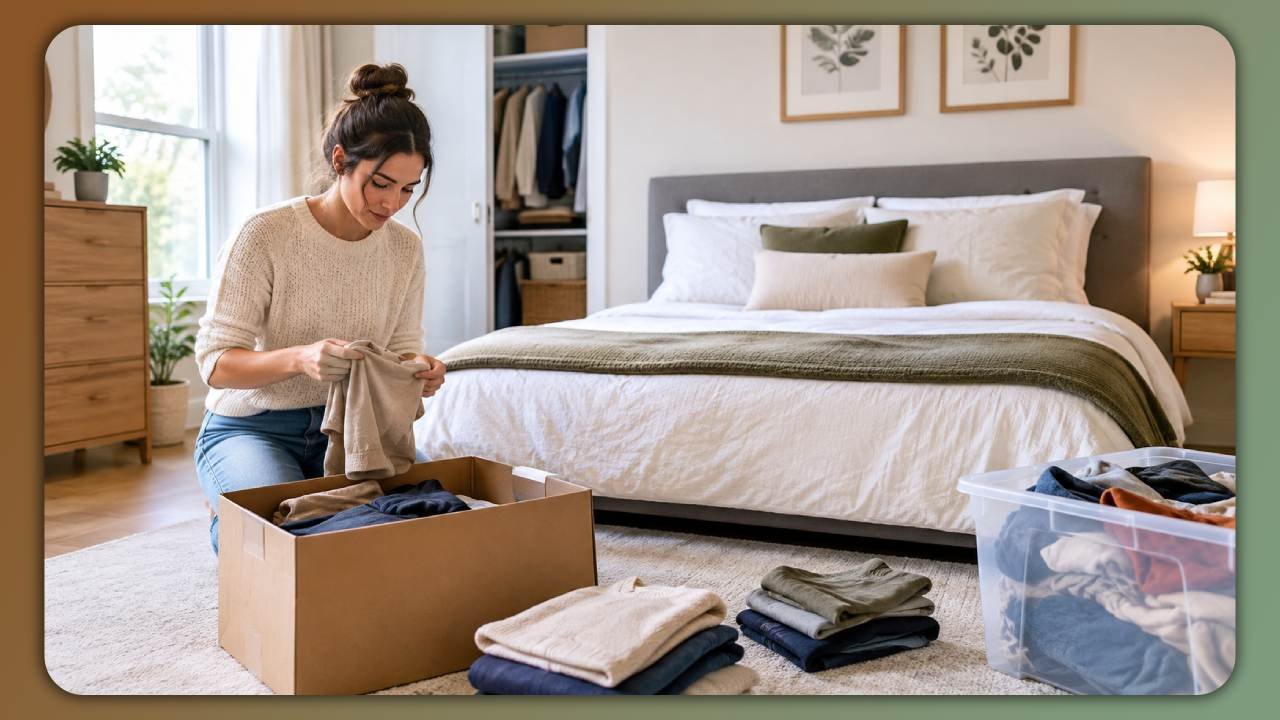
To sort items using the 4-box method, label 4 boxes: Keep, Donate, Relocate, and Trash, then handle each object once. Touching an item more than once slows the process and invites second-guessing.
Keep holds only items used in the bedroom weekly: sleepwear, current books, and daily accessories.
Donate holds unused but usable items: outgrown clothing, duplicate lamps, and unread books older than 12 months.
Relocate holds items that belong elsewhere: phone chargers, coffee mugs, and stray tools that wandered into the bedroom.
Trash holds broken or expired items: dead batteries, torn packaging, and pens that no longer write.
Apply a 3-second rule to every object. If you hesitate longer than 3 seconds over an item, place it in the Donate box. Hesitation signals low attachment, not a hidden need for the item.
How to Declutter Your Closet and Clothes (Sunday Morning)
You declutter a closet by removing every garment first, then sorting by a single question instead of by category. Clothes take longer than any other bedroom zone because each piece carries a decision about money, memory, or body image.
How to Sort Clothes by the 3-Second Rule
To sort clothes by the 3-second rule, pull every hanger and folded item onto the bed at once. Ask one question per item: do you wear this within the current season? A yes keeps the item on the bed for return. A no sends it to Donate or Trash.
Set aside stained or torn garments immediately for the Trash box. A stretched neckline, a broken zip, and a permanent stain are 3 signs an item cannot be saved.
How to Organize the Clothes You Keep
To organize the clothes you keep, arrange them by how often you wear them rather than by color. Place your 10 most-worn items at eye level and within 60cm (2ft) of the closet entrance. Store off-season pieces, such as heavy coats and swimwear, on a higher shelf or in labeled bins.
Slim velvet hangers save 30% more closet width than standard plastic hangers. You see every garment without pressing hangers together. Group remaining clothing into 4 categories inside the closet: tops, bottoms, outerwear, and formalwear. Assign each category its own section so you never search the full rail for 1 shirt.
Shoes deserve the same treatment as clothing. Line up daily shoes, such as trainers and work shoes, on a low rack near the closet door. Store occasion shoes, such as boots and heels, in labeled boxes on a higher shelf.
How to Organize Your Nightstand and Under-Bed Storage
You organize a nightstand by limiting its surface to 4 items and clearing its drawer of anything unrelated to sleep. A cluttered nightstand is the first thing you see at night and the first thing you see each morning.
How to Choose 4 Nightstand Essentials
To choose 4 nightstand essentials, keep only a lamp, a glass of water, your current book, and your phone charger. Everything else, including old receipts, spare change, and expired medication, moves to Relocate or Trash.
Open the nightstand drawer separately from the surface. Drawers collect items over months, such as spare batteries, old headphones, and takeaway menus, that never touched the surface above. Sort the drawer using the same 4-box method you used for the rest of the room.
Under-bed storage works best with bins no taller than 15cm (6in), since most bed frames leave 20cm (8in) of clearance. Label each bin by season or category, such as winter bedding, off-season shoes, and gift wrap.
Measure your clearance before you buy a single bin. Slide a tape measure under the frame at 2 points: near the headboard and near the foot. Many frames sit lower at one end. A bin that fits at the foot may still jam near the headboard, so buy for your smallest measurement.
How to Reset and Style Your Bedroom (Sunday Afternoon)
To reset and style your bedroom, return only Keep items to a new, permanent spot. Skip anything without a clear home. An item without a designated spot becomes tomorrow’s clutter within days.
Vacuum the floor, wipe the dresser and nightstand surfaces, and launder the bedding you removed on Saturday. Add 1 or 2 finishing touches, such as a small plant or a folded throw blanket. These small touches signal the reset is complete.
Photograph the finished room from the doorway. A photo gives you a clear reference point to check against during your monthly maintenance checks later in the year.
Weekend Bedroom Declutter Quick-Reference Table
| Task | Timing | Method | Difficulty |
| Clear all surfaces | Saturday, 60 min | Move items to a holding pile | Easy |
| Sort with 4-box method | Saturday, 2-3 hrs | Keep, Donate, Relocate, Trash | Medium |
| Deliver donations | Saturday evening, 20 min | Load boxes into your car same day | Easy |
| Sort and fold clothes | Sunday, 2-3 hrs | 3-second rule, sort by frequency | Hard |
| Organize nightstand | Sunday, 20 min | Limit to 4 essentials | Easy |
| Set up under-bed bins | Sunday, 30 min | Label bins by category | Medium |
| Final reset and clean | Sunday, 1 hr | Vacuum, wipe, style | Easy |
4 Mistakes That Undo a Weekend Bedroom Declutter
Tidying instead of decluttering ruins more weekends than any other mistake. Arranging clutter into neat piles without removing anything leaves the same volume of items in the room. Folding a shirt you never wear only delays the decision you already need to make.
Keeping a “maybe” box delays every decision you already made once. Give yourself 48 hours to decide on a maybe box, then donate it unopened if the deadline passes. A maybe box left untouched for months confirms you never needed the contents.
Buying storage before sorting wastes money on bins sized for items you no longer own. Edit your belongings first, then measure your remaining items before you shop. Retailers market matching bin sets that rarely fit the exact volume left after an honest sort.
Working alone when you feel stuck stalls the entire process. If guilt keeps pulling you back, learn how to start decluttering overwhelmed rooms and break the work into smaller zones. A neutral friend who sits with you during the closet sort speeds up the hardest hour of the weekend. Your friend shouldn’t decide for you.
How to Keep Your Bedroom Clutter-Free After the Weekend
Keep your bedroom clutter-free by running a 5-minute reset every Sunday evening and following a strict one-in, one-out rule. These 2 habits prevent the slow return of clutter that undoes most weekend efforts within a month.
Add a new book or a new sweater only after removing 1 old item of the same category. This rule keeps your total item count stable instead of climbing every season.
Check under the bed and inside the closet once a month, not once a year. A monthly check catches drifted items, such as stray socks, unopened mail, and empty bags, before they multiply.
Frequently Asked Questions
Can you really declutter a bedroom in one weekend?
Yes, most bedrooms can be fully decluttered in 8 to 10 hours over 2 days. This uses the surface-clear, 4-box sort, and closet method above. Larger rooms or years of buildup may add 2 to 3 extra hours.
Where should you start when decluttering a bedroom?
Start with the surfaces, not the drawers. Clearing the bed, dresser top, nightstand, and floor first gives you visual progress and momentum. A bedroom with clear surfaces feels 50% larger before you touch the closet.
Should you sort clothes by season or by frequency of use?
Sort by frequency of use, not by season alone. Placing your 10 most-worn items at eye level saves time every morning. Move off-season pieces to higher shelves or bins.
Do you need to buy storage bins before you declutter?
No, buy storage bins after you sort, not before. Editing your items first tells you exactly how many bins you need, which prevents wasted purchases. Most bedrooms need 3 to 4 bins total.
How do you stop a bedroom from getting cluttered again after a weekend reset?
Run a 5-minute Sunday reset and apply the one-in-one-out rule to every new item. These 2 habits catch drift before it turns into a pile.
A decluttered bedroom in one weekend comes down to the right order: clear, sort, store, and reset. If clutter has spread beyond the bedroom, check these signs you need declutter help. Then apply the same 4-box method room by room across your whole home, one weekend at a time.