How to Declutter Without Buying Any Storage Products First
You can declutter without buying storage products by sorting your belongings first, repurposing containers you already own, and shopping for storage only after you know what is left. This order saves money and stops clutter moving into expensive new bins. Buying baskets before you purge just gives mess a nicer home. The method works for households across the UK, US, and Canada because it relies on decisions, not purchases. Self-storage units also carry a monthly fee in the UK, US, and Canada, and many renters fill a unit with boxes they never open again. Skipping that expense starts with the same decluttering steps used inside the home. Below are 7 free ways to declutter without buying storage products, room-by-room ideas, and the mistakes that waste time and money in 2026.
Why Decluttering Comes Before Organising
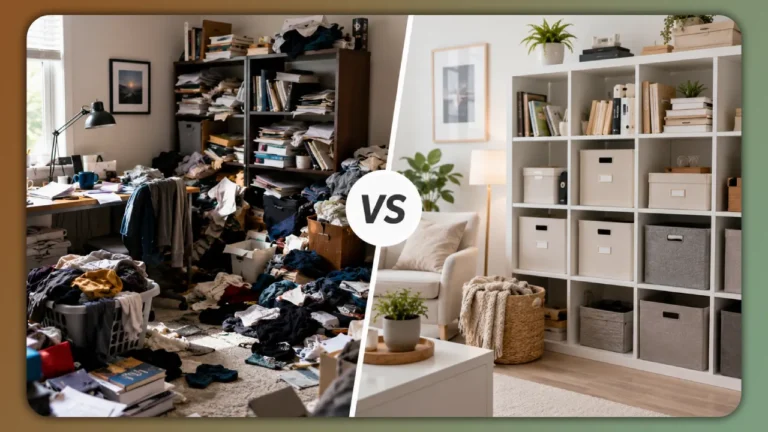
Decluttering before organising works because it reduces the number of items a household needs to store. Fewer belongings need fewer containers, and fewer containers cost less money. Organising first only rearranges clutter into new shapes; it never removes anything from the house.
Two mental habits push people to buy bins too early. The sunk cost fallacy makes you keep an item because you already paid for it, even if you never use it. Decision fatigue makes buying a new bin feel easier than deciding whether to keep, sell, or donate an item. Skip the decision stage, and you end up paying to store things you should have thrown away.
Measure your space after you declutter, never before. A wardrobe that holds 40 items does not need a 60-litre (16-gallon) tote if you only keep 15 items once you finish sorting. Buying storage based on guesswork wastes both money and shelf space.
Clutter also builds gradually, one small purchase at a time, so it rarely feels urgent until a drawer will not close. Reversing that pattern takes the same gradual approach: one shelf, one drawer, or one cupboard at a time, with a decision made on every single item before it earns a permanent spot.
How to Sort Items Without Buying New Bins
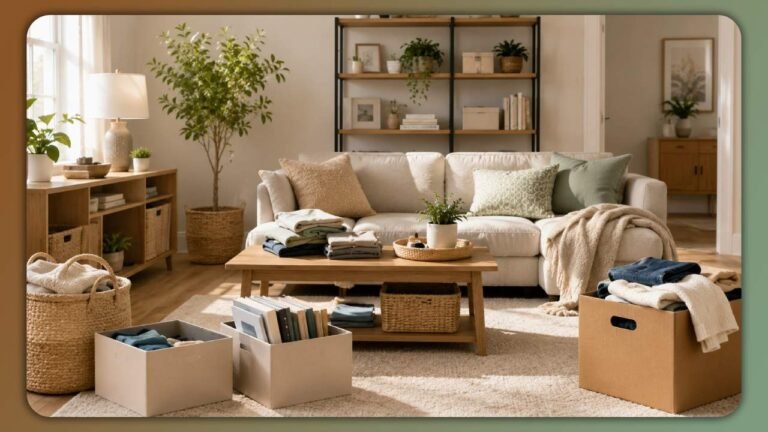
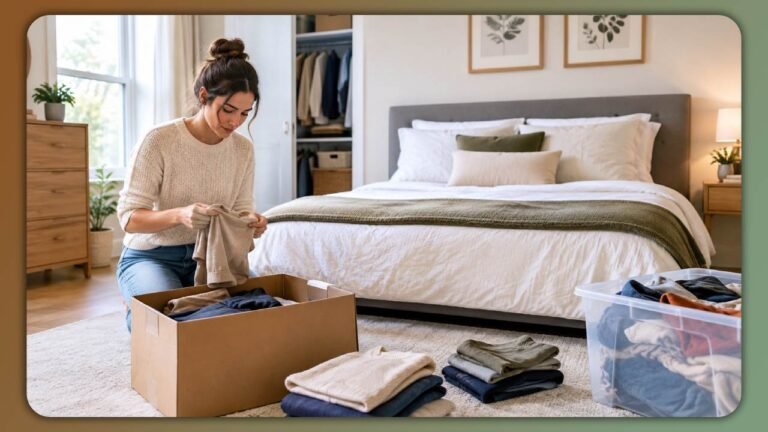
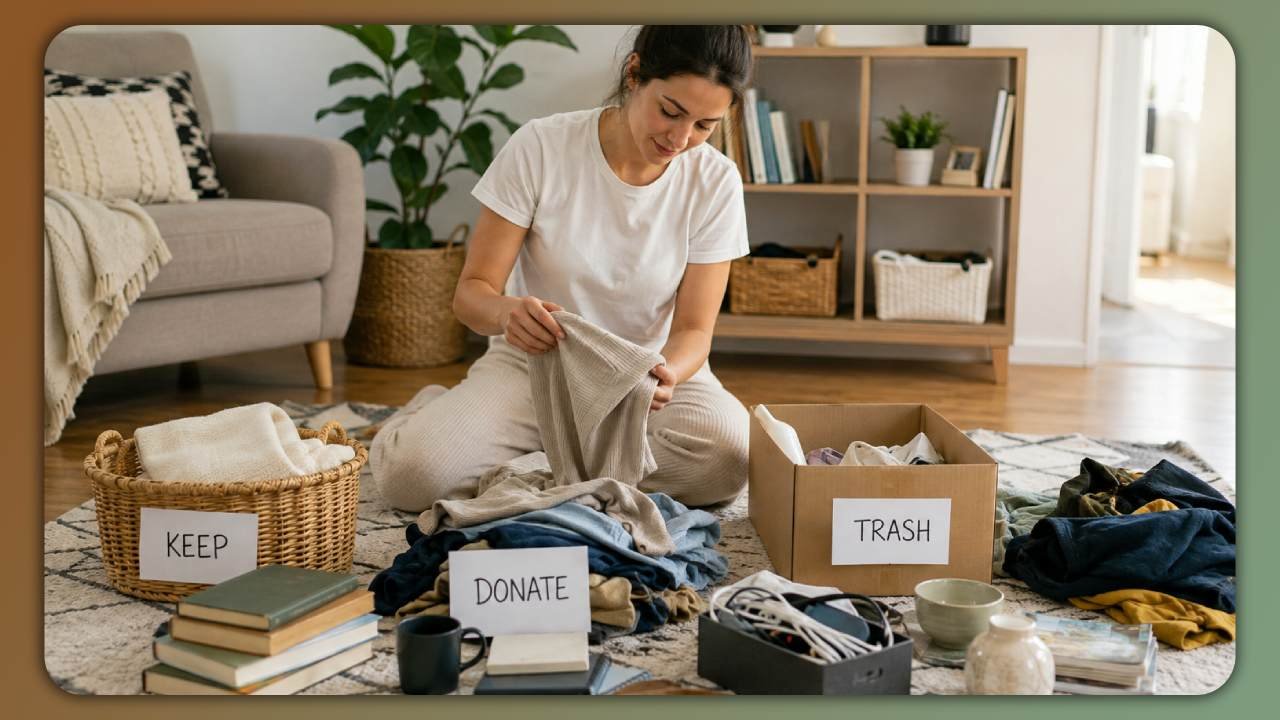
To sort items without new bins, use 4 piles: keep, donate, sell, and bin. Mark each pile with something already in the house, such as a laundry basket, a flattened cardboard box, or a bedsheet on the floor. This is the fastest way to declutter without buying storage products for an entire home.
Follow these 5 steps in every room:
- Set a timer for 20 minutes per drawer, shelf, or cupboard.
- Pick up each item once and assign it to a pile immediately.
- Skip an item you are unsure about no more than twice; decide on the third pass.
- Bag donations the same day so they do not drift back into the house.
- List sellable items on Facebook Marketplace, Vinted, or Kijiji within 48 hours.
Most wardrobes, kitchen cupboards, and bathroom cabinets end up holding far fewer items than expected once the four piles are sorted. That drop in volume is what removes the need for new storage in the first place.
Repurpose What You Already Own for Storage
Once you decide what stays, repurpose household items before buying anything new. DIY (do-it-yourself) storage solutions such as shoeboxes, jam jars, ice cream tubs, and egg cartons work as well as shop-bought organisers, and they cost nothing.
| Household Item | Reuse As |
| Shoeboxes | Drawer dividers for socks, cables, or craft supplies |
| Glass jars | Spice jars, or storage for hair ties and cotton pads |
| Egg cartons | Trays for small jewellery, buttons, or drawing pins |
| Suitcases | Under-bed storage for out-of-season clothing |
| Wine crates | Open shelving for books, magazines, or toys |
| Cutlery trays | Organisers for makeup or office supplies |
| Tea tins | Dry storage for spices or a small sewing kit |
Wrap a container in leftover wrapping paper, fabric offcuts, or paint if you want a tidier look. This step stays free if the paper or paint is already in the house.
Cost Comparison: Repurposed Storage vs Bought Storage
A basic plastic storage tote costs roughly £5 to £15 in the UK, or $8 to $20 in the US and Canada, and most households need several to organise a single room. A shoebox, jar, or crate pulled from the recycling bin costs nothing and often holds the same amount. The only real expense with repurposed storage is a small amount of time spent cleaning and labelling a container that would otherwise go straight into the recycling.
Matching, colour-coordinated bins add a further cost on top of basic totes, often doubling the price for the same storage capacity. That cost buys appearance, not function, so it is worth adding only after every free and repurposed option has been used.
Declutter Without Buying Storage Products, Room by Room
Kitchen
Empty one cabinet at a time onto the counter. Group duplicates, such as three sets of measuring cups or two garlic presses, and keep only the best one. Use a spare cutlery tray from another drawer to separate lids, and nest spare food containers inside each other to save 30% to 40% more shelf space.
Bedroom and Wardrobe
Turn every hanger the same direction, then flip it after you wear that item. After 90 days, anything still facing the original direction is a donation candidate. Fold clothing with the vertical filing method so drawers show every item without a single new box, bin, or divider.
Bathroom
Sort expired products first; check use-by dates on sunscreen, medicine, and makeup, since most are only good for 6 to 12 months once opened. Use a repurposed jar or mug to hold toothbrushes, and a shoebox under the sink for cleaning supplies.
Home Office
Sort paperwork into three piles: shred, file, and action. Reuse an empty cereal box, cut down and covered in spare paper, as a filing tray for bills and letters. This clears a desk without a single trip to a stationery aisle.
Kids’ Rooms and Playrooms
Rotate toys instead of storing them all at once. Keep half the toys in a cupboard and swap them every 2 to 3 weeks. This cuts visible clutter by roughly half without buying a single new bin or crate.
Entryway and Hallway
Hang a hook strip you already own for coats and bags. Use a low basket or an old crate for shoes instead of a new shoe rack, and keep a small dish for keys on a shelf or windowsill you already have.
Garage, Shed, and Utility Room
Group items by category first: tools, sports gear, seasonal decorations, and cleaning supplies. Old paint tins, cleaned and labelled, hold nails and screws by size. Stack empty plant pots inside each other instead of buying a rack, and hang a spare curtain rod across two hooks to store extension cables off the floor.
Free Places to Find Storage After You Declutter
If a container is still missing after sorting and repurposing, check free sources before you shop. Charity shops, community giveaway groups, and curbside finds cover most storage needs at no cost.
In the UK, Freecycle and local Buy Nothing groups on Facebook list free bins, baskets, and shelving daily, and charity shops such as the British Heart Foundation sell secondhand storage furniture for a fraction of retail price. In the US, Buy Nothing groups, yard sales, and thrift stores including Goodwill offer similar low-cost or free options. In Canada, Kijiji’s free section and Habitat for Humanity ReStore locations carry shelving, drawers, and baskets donated by other households.
Only buy new storage once these free and low-cost routes stop covering what a household actually needs.
When It Is Actually Time to Buy Storage
Buying storage makes sense only after decluttering, repurposing, and checking free sources fail to solve the problem. A household reaches this point when every item has an assigned home, the space is measured in centimetres or inches, and a repurposed container still will not fit.
Set a hard budget cap before shopping, such as £15, $20, or C$25 per item, and buy for the exact measurements taken earlier. Most people can declutter without buying storage products entirely, since a full sort combined with free finds covers the majority of household needs.
Habits That Stop Clutter From Coming Back
A one-in-one-out rule stops clutter from coming back after you declutter. For every new item brought home, remove one similar item. This single habit keeps wardrobes, kitchens, and shelves from refilling within a few months.
Add a weekly 10-minute reset. Walk through the house and return items to their assigned spot before the week ends. This habit matters more than any storage product, because misplaced items cause most visible clutter, not a lack of bins.
Money organising helps too. A simple budget spreadsheet reduces impulse buys, which are a major source of new clutter in most homes. Digital clutter counts as well; unsubscribe from marketing emails and delete unused apps during the same session to cut down on both physical and digital mess.
A seasonal check every 3 months catches clutter before it builds up again. Walk through each room at the start of a new season, pull anything unused since the last check, and run it through the same four piles used during the original declutter. This turns a one-time project into a repeatable system instead of a task that needs redoing from scratch every year.
Space Keep covers budget-friendly organisation ideas across every room for households ready to go further after this guide. Browse the full blog for room-specific guides published after this one.
Mistakes to Avoid When You Declutter Without Buying Storage Products
- Buying bins before sorting. This wastes money on containers sized for the wrong amount of belongings.
- Keeping a “maybe” pile too long. Set a 30-day deadline, then donate anything still inside it.
- Skipping measurements. Measure shelves and drawers before repurposing containers so they actually fit.
- Ignoring donation deadlines. Bag items and drop them off within a week so they do not re-enter the house.
- Labelling nothing. Use masking tape and a marker, both usually already in a kitchen drawer, to label every repurposed container.
- Sorting the whole house in one day. This causes decision fatigue by the second room, and the last few rooms get rushed or skipped entirely.
- Forgetting to measure the container itself. A repurposed box that is too tall for a shelf wastes the same space a new bin would.
Frequently Asked Questions
Do I need to buy storage bins to get organised?
No, you do not need to buy storage bins to get organised. Shoeboxes, jars, suitcases, and other containers already in the house handle most storage needs once decluttering is finished.
How long does it take to declutter a room without buying storage?
Decluttering an average bedroom or kitchen takes 2 to 4 hours using the four-pile method. Larger spaces with more storage, such as a garage or loft, can take a full weekend, especially if items have not been sorted in several years.
What can I use instead of storage bins?
Shoeboxes, glass jars, egg cartons, suitcases, and wine crates work instead of storage bins. Each option costs nothing if the item is already sitting in the house.
Is it cheaper to declutter first or buy organisers first?
Decluttering first is cheaper because it lowers the number of containers a household needs. Buying organisers before sorting often means paying for bins sized for items that get donated anyway.
Where can I find free storage containers in the UK, US, or Canada?
Charity shops, Freecycle, Buy Nothing groups, and local marketplace apps offer free storage containers across the UK, US, and Canada. Check these sources before buying anything new, since most areas have at least one active giveaway group posting daily.
How do I stop clutter from coming back after I organise?
A one-in-one-out rule and a weekly 10-minute reset stop clutter from coming back after organising. Both habits cost nothing and take less time than a shopping trip for new storage.
Should I declutter room by room or all at once?
Room by room decluttering works better for most households because it avoids decision fatigue. Tackling one drawer, shelf, or cupboard at a time keeps the process manageable and easier to finish.