Decluttering vs Organising: What’s the Real Difference in 2026?
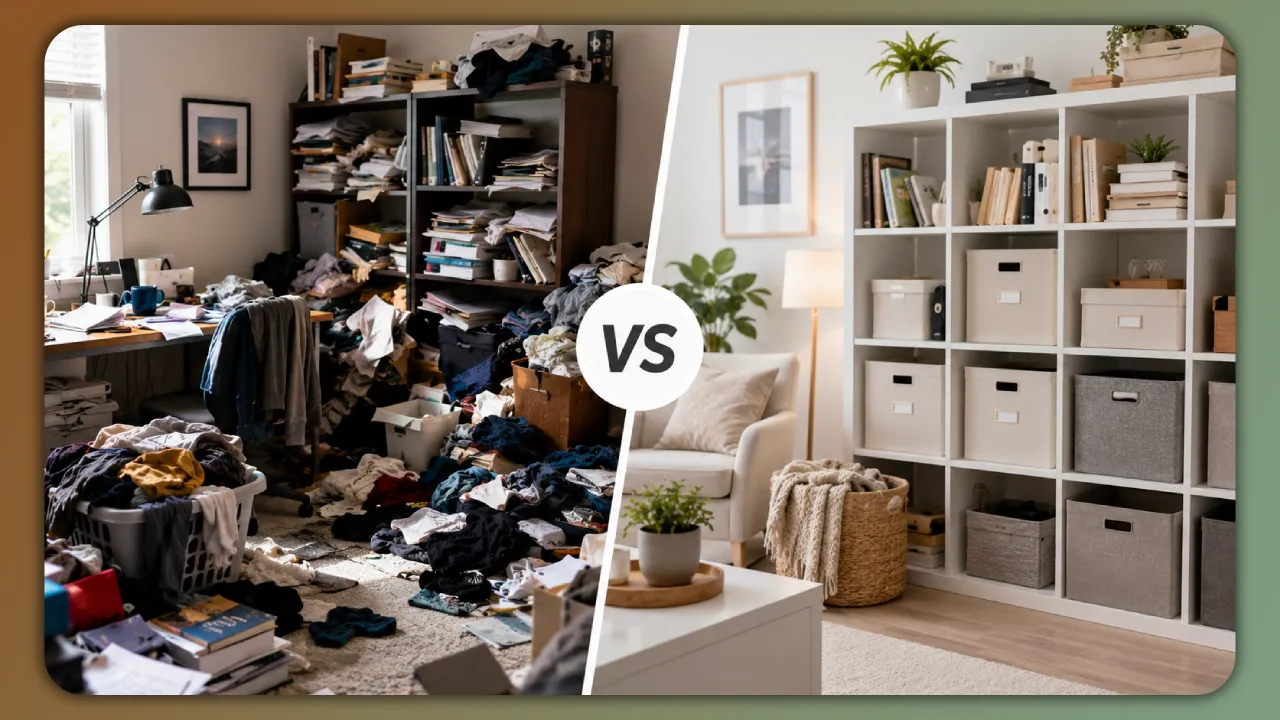
Decluttering removes items you no longer need, want, or use. Organising arranges the items you keep into systems that work for your daily routine.
Both processes solve different problems. Decluttering vs organising confuses many homeowners because people use the two terms as if they mean the same thing. They don’t.
You reduce volume when you declutter. You create order when you organise. Understanding the difference between decluttering and organising saves you money on storage products, saves you hours of repeated effort, and helps you build a home that stays tidy longer than 1 weekend.
This guide breaks down both processes, shows you the correct order for tackling a room, and gives you named methods such as the KonMari method and the SPACE method to try.
Homeowners across the UK, the US, Canada, and Australia search for decluttering vs organising advice every year, yet most articles blend the 2 processes into 1 vague list of tips. This guide keeps them separate so you know exactly which task to tackle first.
What Is the Real Difference Between Decluttering vs Organising?
Decluttering answers the question “do you keep this?” Organising answers the question “where does this go?” These 2 questions require different skills, different amounts of time, and different mental effort.
Decluttering is a decision-making process. You look at each item and sort it into 3 piles: keep, donate, or discard. Organising is a system-building process. You place items into categories, containers, and zones so you find them again in seconds.
The confusion around decluttering vs organising happens because both processes often occur inside the same room, on the same day, with the same person doing the work. A professional member of APDO, the Association of Professional Declutterers and Organisers, usually separates the 2 steps into distinct sessions to avoid decision fatigue.
Decision fatigue explains why most decluttering sessions stall after 45 minutes. Your brain processes hundreds of keep-or-discard choices in a single session, and each choice draws on the same mental energy. Organising, by contrast, relies on repetitive physical motion rather than constant decisions, so it feels less draining once the keep pile is set.
Recognising decluttering vs organising as 2 separate skills changes how you plan a weekend project. You block dedicated time for decisions first, then a separate block for physical arrangement, rather than mixing both and losing momentum halfway through a room.
What Does Decluttering Actually Involve?
Decluttering involves removing 3 types of items from a space: things you no longer use, things you no longer need, and things you no longer want. You sort every item into a keep, donate, or discard pile.
Decluttering produces immediate results within 1 session. A single drawer takes 10 minutes. A full wardrobe takes 2 hours (120 minutes) on average. Momentum builds fast because you see visible progress within minutes, not days.
Decluttering also removes 3 hidden costs from your home: the storage cost of housing unused items, the search cost of digging through excess belongings, and the emotional cost of a cluttered space. A study cited by APDO links visible clutter to higher reported stress levels among UK homeowners.
3 Signs a Room Needs Decluttering First
You need decluttering, not organising, when 3 signs appear together. Items spill out of drawers, cabinets, and containers, such as overstuffed sock drawers, bursting linen cupboards, and overflowing toy boxes. You buy duplicates because you cannot find what you already own. Surfaces such as countertops, tables, and chairs collect piles within 24 hours of clearing them.
Check our guide on signs you need decluttering for a full 10-point checklist covering every room in your home.
5 Categories to Sort During a Declutter
Every declutter session sorts belongings into 5 categories: clothing, paperwork, kitchenware, sentimental items, and electronics. Clothing includes shirts, trousers, and shoes you have not worn in 12 months. Paperwork includes receipts, expired warranties, and old bank statements. Sentimental items include photographs, letters, and inherited objects that carry emotional weight rather than practical use.
What Does Organising Actually Involve?
Organising assigns a fixed home to every item you decide to keep. Organising takes longer than decluttering and needs regular maintenance to stay effective. A decluttered wardrobe with no system falls back into chaos within 2 weeks.
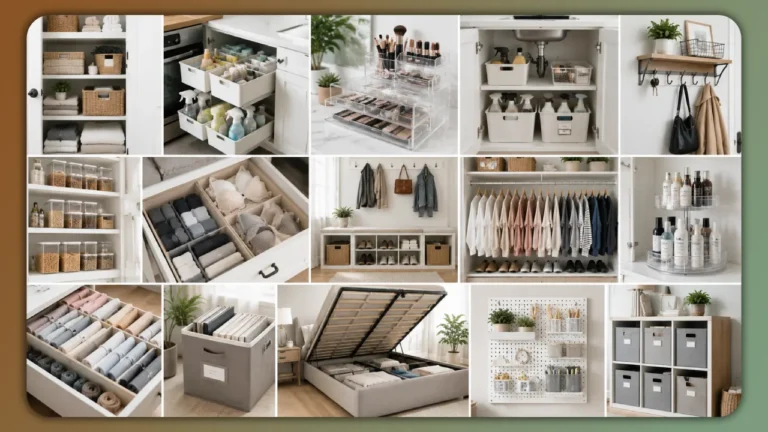
Organising uses containers, labels, and zones to group similar items together. A kitchen drawer organised by category holds cutlery, utensils, and gadgets in 3 separate compartments instead of 1 tangled pile. Minimalism is not required for effective organising; the system simply has to match your habits.
A functional organising system passes 3 tests: you find any item within 10 seconds, you return the item to the same spot without thinking, and a family member finds the item without asking you first. Systems that fail these tests need redesigning, not more storage products.
4 Popular Organising Systems
Home organisers use 4 named systems most often: the KonMari method created by Marie Kondo, the SPACE method created by Julie Morgenstern, zone-based organising popularised by The Home Edit, and category-first organising favoured by Swedish Death Cleaning author Margareta Magnusson.
The KonMari method groups items by category across the whole house rather than room by room. The SPACE method stands for Sort, Purge, Assign, Containerise, and Equalise, and it builds a maintenance step into the final stage.
Decluttering vs Organising: Which Comes First?
Decluttering comes first in almost every case. Organising items you do not need wastes containers, shelving, and hours of labelling time on things headed for donation anyway.
You reduce the volume of belongings before you build a system to store them. Fewer items mean fewer bins, fewer labels, and less time spent maintaining the space each week.
Skip decluttering only if you already know every item in the room serves a purpose. A well-curated art studio, a professional toolkit, or a hobby collection with 0 excess items can move straight to organising. For most homes, the decluttering vs organising decision favours decluttering first, organising second.
1 exception applies during a house move or a tight deadline. When time runs short, you organise items into labelled boxes first, then declutter properly once you unpack in the new space. This exception trades long-term efficiency for short-term speed.
How to Declutter a Room in 5 Steps
To declutter a room, empty 1 category at a time, sort every item into 3 piles, and remove the discard pile within 24 hours.
- Pick 1 category: clothing, books, or kitchenware.
- Remove every item from its current spot.
- Sort items into keep, donate, and discard piles.
- Bag the donate pile and schedule a drop-off within 48 hours.
- Throw away or recycle the discard pile the same day.
Feeling stuck before you even begin? Read our post on where to start decluttering for a 15-minute method that beats overwhelm.
How Long Each Step Takes
A single drawer takes 10 minutes. A wardrobe holding 50 items takes 90 minutes (1.5 hours). A full garage takes 6 hours split across 2 sessions.
How to Organise a Room After Decluttering
To organise a room, group remaining items by category, assign each category a fixed zone, and label every container clearly.
Start with the items you use daily. Store daily items at eye level, between 3 feet and 5 feet (0.9m to 1.5m) from the floor. Store seasonal items such as Christmas decorations, summer clothing, and camping gear on higher or lower shelves.
3 Storage Tools Worth Buying
Buy storage tools only after decluttering finishes. 3 tools cover most homes: clear stackable bins measuring 12 inches by 16 inches (30cm by 40cm), drawer dividers for kitchens and offices, and labelled baskets for pantries and bathrooms.
Our article on declutter without storage products explains how to organise a room with 0 new purchases using containers you already own.
What Mistakes Do People Make Confusing Decluttering vs Organising?
People buy storage products before they declutter, which wastes money on containers for items they later donate. This mistake costs the average household £150 to £300 ($190 to $380) per year on unused bins, baskets, and organisers.
A second mistake treats organising as a 1-time event rather than an ongoing habit. Systems need reviewing every 3 to 6 months as your needs change, your family grows, or the seasons shift.
A third mistake skips the discard pile completely. You move clutter into storage instead of removing it, which hides the problem instead of solving it. A garage stacked with bins from a previous move often contains items nobody has touched in 5 years.
A fourth mistake copies someone else’s system without adapting it. A labelled pantry from a magazine photo fails in your home if your family shops weekly instead of monthly, or if 3 children under 10 use the space daily. Effective organising always starts with your actual habits, not a template.
Avoiding these 4 mistakes saves you time, money, and repeated frustration with a system that never sticks.
How Do You Maintain a Decluttered and Organised Home?
Maintain a decluttered and organised home with 3 short habits: a nightly 10-minute reset, a monthly 1-category review, and a seasonal 4-times-a-year deep check. Skipping maintenance undoes weeks of decluttering and organising work within 2 or 3 months.
A nightly reset takes 10 minutes and covers 3 tasks: return stray items to their zone, clear flat surfaces such as counters and tables, and load or empty the dishwasher. Families with 2 or more children often assign 1 task per person to finish the reset in under 5 minutes.
A monthly review targets 1 category, such as the fridge, the mail pile, or the bathroom cabinet. You spend 15 to 20 minutes checking for expired items, duplicates, and anything that migrated from its assigned zone.
A seasonal deep check happens 4 times a year, aligned with each season change. You swap seasonal clothing, check storage bins for damage, and repeat a short declutter pass on any category that built up clutter again. This seasonal rhythm keeps the gap between decluttering vs organising sessions short enough that neither task ever feels overwhelming.
Decluttering vs Organising: Quick-Reference Comparison Table
Use this table to plan timing for the decluttering vs organising tasks ahead of you this month.
| Task | Timing | Method | Difficulty |
| Sort a drawer | 10 minutes | Keep, donate, discard piles | Easy |
| Declutter a wardrobe | 90 minutes | KonMari category sort | Moderate |
| Declutter a garage | 6 hours | 2-session category sort | Hard |
| Organise a kitchen | 2 hours | SPACE method zones | Moderate |
| Organise a home office | 3 hours | Category-first labelling | Moderate |
| Full-home declutter and organise | 3 to 5 days | Room-by-room combined approach | Hard |
When Should You Hire a Professional Organiser or Declutterer?
Hire a professional when clutter affects your daily function, not just your home’s appearance. A professional organiser or declutterer helps in situations involving grief, a house move, ADHD, or chronic overwhelm.
Professionals bring 3 advantages: an outside perspective on sentimental attachment, faster physical sorting through 2 or more sets of hands, and trained systems that match your specific lifestyle. A typical session with a UK-based member of APDO costs between £30 and £60 ($38 to $76) per hour.
Other regions run similar professional bodies. The US market uses NAPO, the National Association of Productivity and Organizing Professionals. Canada uses Professional Organizers in Canada (POC). Australia and New Zealand use the Australasian Association of Professional Organisers (AAPO). Each body sets training standards and connects you with vetted local specialists.
Book a free consultation before you commit to a full package. Most professional organisers offer a 30-minute call to assess your space, discuss your budget, and outline whether you need decluttering, organising, or both combined into 1 project.
Frequently Asked Questions
Should you declutter or organise first?
Yes, declutter first. Removing items you no longer need reduces the volume you organise, which saves time, money, and storage space.
Is decluttering the same as organising?
No. Decluttering removes unwanted items. Organising arranges the items you keep into functional systems with fixed homes.
How long does decluttering a whole house take?
A full-home declutter takes 3 to 5 days for a family of 4, split across weekends or evening sessions.
Do you need to buy storage products to organise a room?
No. Many rooms organise successfully using containers, boxes, and baskets you already own before you buy anything new.
Can a professional organiser help with both decluttering and organising?
Yes. Most professional organisers in the UK, US, Canada, and Australia offer combined sessions covering both processes in 1 visit.
What causes a decluttered space to become messy again?
No organising system. A space stays decluttered only when every remaining item has a fixed home and a simple habit keeps it there.
Conclusion
Decluttering vs organising describes 2 separate skills that work best in sequence: decluttering first, organising second. You remove what you do not need, then you build a system for what remains.
Start with 1 drawer today, not the whole house. Small, consistent sessions beat 1 overwhelming weekend every time. Pick a category, set a 10-minute timer, and sort your first pile before you close this page.
Ready for more room-by-room guidance? Browse our decluttering and organising guides at Space Keep to keep the momentum going.