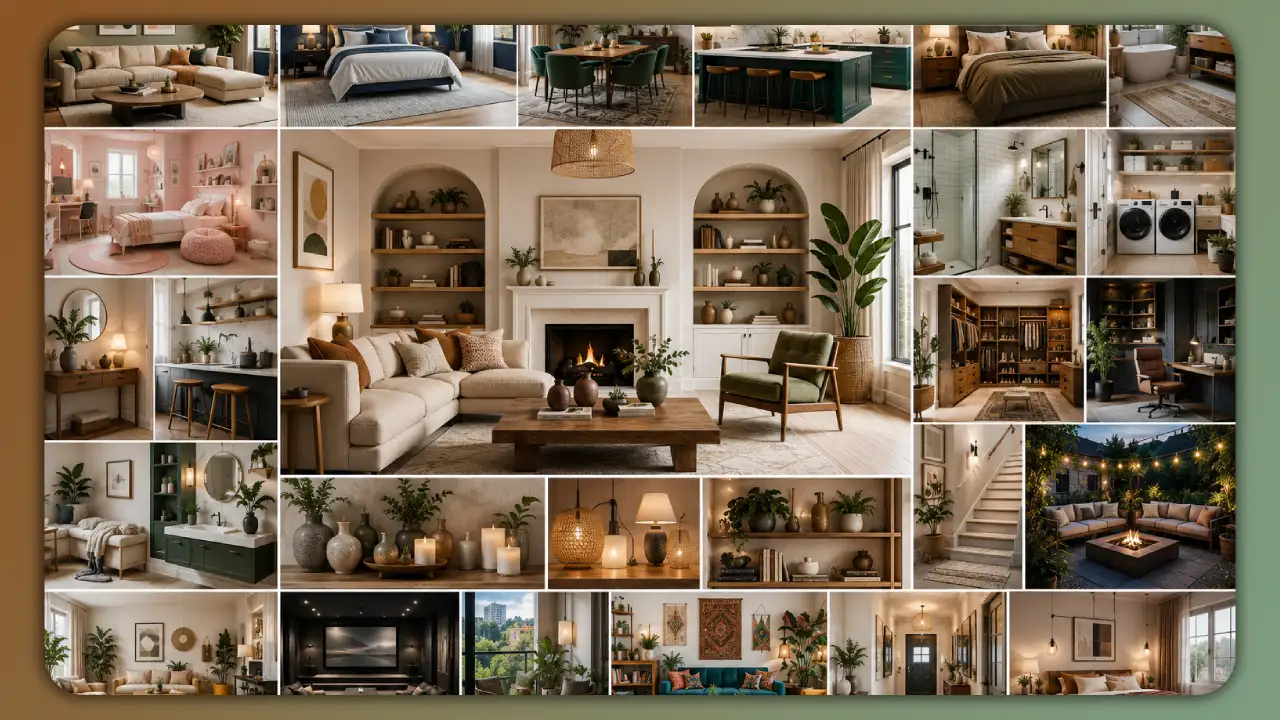
35 Home Decor Ideas for Every Room in 2026
Home decor ideas work best when you pick one focal point per room, repeat a single color at least three times, and layer at least three textures. This guide lists 35 home decor ideas for living rooms, bedrooms, kitchens, and small spaces, plus budget breakdowns, common mistakes, and DIY home accessories ideas. Every idea suits homes in the UK, US, and Canada, with measurements given in metric and imperial units, so a room refresh in 2026 does not need a professional designer.
What Are Home Decor Ideas?
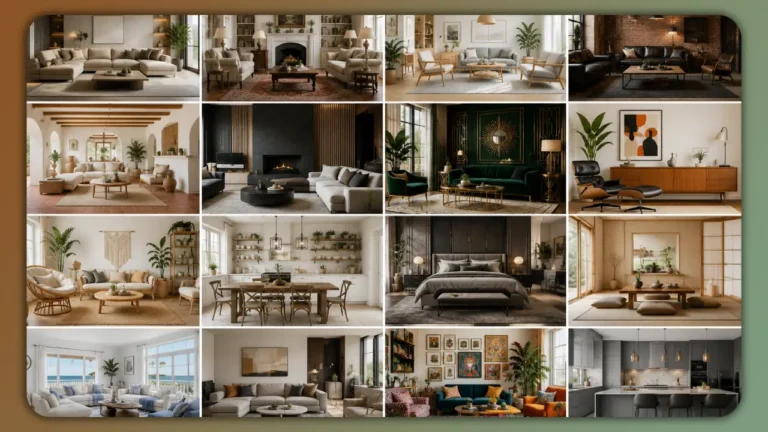
Home decor ideas are specific, low-cost changes, such as new cushions, a rearranged shelf, or updated lighting, that refresh a room without structural work. They differ from interior design, which plans a room’s layout, furniture scale, and architectural detail. Home decor ideas execute a chosen style through movable elements: color, texture, lighting, and accessories. Anyone still deciding on a direction should read our guide to 16 types of interior design styles before choosing decorative ideas for home rooms.
How to Choose Decor Ideas for Any Room
To pick decor ideas that suit a room, assess the natural light first, then build color, texture, and one statement piece around it.
- Assess natural light before buying any color or fabric.
- Choose one dominant color and two supporting shades; a 60-30-10 ratio works for most rooms.
- Add texture through a rug, a knit throw, or unfinished wood.
- Pick one focal point per room, such as a fireplace, a bed, or a statement mirror.
- Layer lighting at three heights: floor lamp, table lamp, and ceiling fixture.
- Repeat one material or color at least three times so the room reads as planned, not random.
Work through these steps in order rather than jumping straight to accessories. Light and color set the ceiling on how a room can look, texture and the focal point do the heavy lifting, and accessories are the last five percent of the work. Skipping straight to cushions and candles is the most common reason a room still looks unfinished after money has already been spent on it.
35 Decor Ideas by Room
Each room below lists decor ideas in the order they matter most: layout and light first, then texture and color, then finishing accessories. Work through one room at a time rather than buying for the whole house in a single trip; a slower pace keeps the final look cohesive instead of scattered.
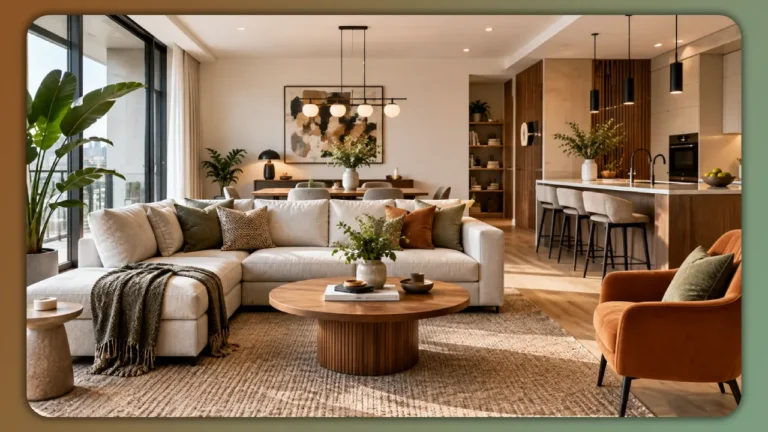
Living Room Decor Ideas
- Swap a stiff sofa throw for a bouclé or chunky-knit blanket in a warm neutral.
- Layer a 5 ft x 8 ft (1.5 m x 2.4 m) jute or wool rug under the coffee table, not just in front of the sofa.
- Group three to five candles or vases of varying height on the coffee table for a styled vignette.
- Replace a single overhead light with a floor lamp and two table lamps for layered lighting.
- Hang a gallery wall of 5 to 7 framed prints, spaced 2 to 3 inches (5 to 8 cm) apart.
- Add a floor mirror to bounce light; it can make a narrow room look up to 20% wider.
- Introduce one bold or patterned accent chair to break up a neutral sofa set.
- Style open shelving in odd-numbered groups of three, mixing books, small art, and one plant.
Bedroom Decor Ideas
- Layer a duvet, a quilt, and two accent pillows for a hotel-style bed.
- Install a fabric or wood headboard in an afternoon; no structural work required.
- Add bedside lamps with warm 2700K bulbs instead of one bright ceiling light.
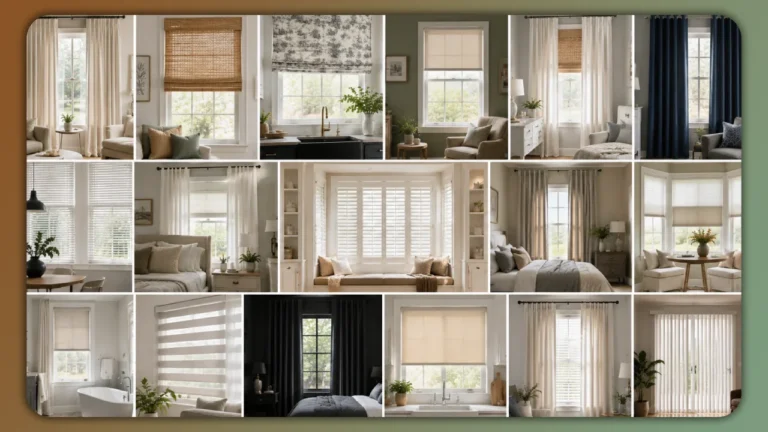
- Hang curtains 4 to 6 inches (10 to 15 cm) above the window frame to make ceilings look taller.
- Use a woven basket or ladder shelf for open storage instead of a closed cabinet.
- Place a small rug on each side of the bed rather than one rug centered underneath.
- Frame two to three pieces of art above the headboard, centered at eye level when seated in bed.
- Add a woven or upholstered bench at the foot of the bed for texture and practical seating.
Kitchen and Dining Decor Ideas
- Swap cabinet hardware for brass or matte black knobs; a 30-minute project that changes the kitchen’s whole tone.
- Decant dry goods into matching glass or ceramic canisters for open-shelf storage.
- Hang three pendant lights over an island instead of one central fixture.
- Add a table runner and a low centerpiece under 6 inches (15 cm) tall so diners can see across the table.
- Display everyday plates on a wall-mounted rack instead of storing them in a cabinet.
- Layer open shelves with everyday dishware plus two or three decorative pieces.
- Add a runner rug in front of the sink for color and cushioning underfoot.
Small Space and Entryway Decor Ideas
- Use a narrow console table under 12 inches (30 cm) deep for entryways.
- Mount hooks at two heights so both adults and children can hang coats.
- Choose one large mirror instead of several small ones; it reflects more light per square foot.
- Add a slim bench with under-seat storage for shoes.
- Use vertical wall shelves instead of floor units in rooms under 70 sq ft (6.5 sq m).
- Choose furniture with exposed legs so more floor is visible, making the room feel larger.
Bathroom Decor Ideas
- Swap a plain shower curtain for a weighted fabric one with a matching liner.
- Add a woven bath mat instead of one thick, single-texture mat.
- Store towels on an open ladder rack instead of in a closed cabinet.
- Add a small potted plant that tolerates humidity, such as a fern or pothos.
- Replace a single vanity light with two sconces flanking the mirror.
- Use matching glass dispensers for soap and lotion instead of original plastic bottles.
Repeat two or three of the same finish, such as brushed brass or matte black, across at least two rooms. That repetition is what makes a whole home feel considered when a visitor moves from the entryway into the living room, rather than feeling like each room was decorated in isolation.
Decor Ideas for UK, US, and Canada Homes
Decor choices need small adjustments across the UK, US, and Canada because of differences in window size, heating, and room proportions. UK and Canadian homes often use radiators, so floor-length curtains should clear a wall-mounted radiator by at least 2 inches (5 cm) to avoid scorching or blocked heat. US homes with forced-air heating and baseboard vents have more flexibility with curtain length and furniture placement against exterior walls.
Room proportions also differ: UK terraced houses and Canadian older homes tend to have windows around 3 to 4 ft (0.9 to 1.2 m) wide, while newer US builds often run larger, so a rug or rail sized for one market can look undersized in another. Always measure the actual room in feet and centimeters before ordering rugs, curtains, or furniture online, and check a retailer’s regional sizing chart rather than assuming international standard sizes.
Decor Ideas by Budget
Decor ideas fall into three budget tiers: under GBP 50 (USD 60), GBP 50 to 200 (USD 60 to 250), and GBP 200-plus (USD 250-plus) for investment pieces. The table below breaks down what fits each tier.
| Budget Tier | Example Home Decor Ideas | Typical Cost |
| Budget (under GBP 50 / USD 60) | Cushion covers, a vase, cabinet knobs, a woven basket | GBP 15-45 / USD 20-55 |
| Mid-range (GBP 50-200 / USD 60-250) | A table lamp, a framed art set, a bath mat set, curtains | GBP 55-190 / USD 65-240 |
| Investment (GBP 200+ / USD 250+) | An area rug, a headboard, a pendant light set, an accent chair | GBP 220-600 / USD 280-750 |
Decorating Mistakes to Avoid
Six mistakes undo an otherwise good room, no matter how many home decorations ideas went into it.
- Avoid hanging art above eye level; the center of a piece should sit 57 inches (145 cm) from the floor.
- Avoid buying a rug too small for the room; furniture legs should sit on the rug, not beside it.
- Avoid relying on ceiling light alone; every room needs at least three light sources at different heights.
- Avoid matching every accessory to one finish; mix two or three, such as brass and matte black.
- Avoid ignoring scale; one well-sized piece works better than five small, scattered items.
- Avoid skipping texture; an all-smooth room of glass, metal, and cotton reads as cold and unfinished.
Most of these mistakes come from decorating in a rush, buying pieces separately without checking them against the rest of the room. Photograph the room before shopping, and hold each new item up against that photo, on a phone screen, before adding it to a cart. That single habit catches scale and color problems before they reach the house.
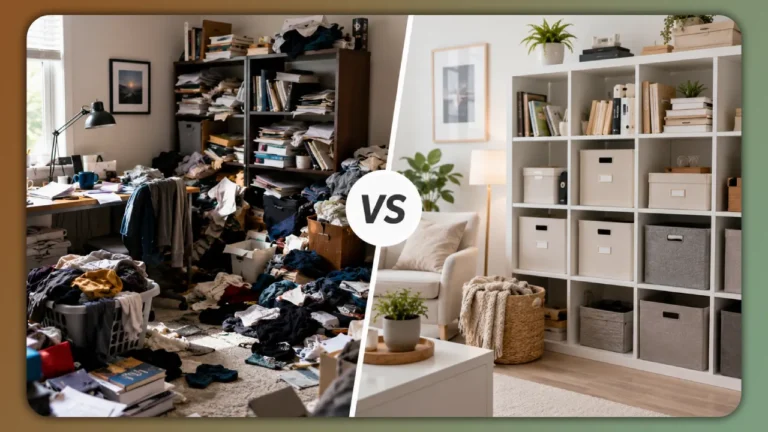
Clutter undoes decor faster than any of the above. See our guide to the benefits of decluttering your home if surfaces are too full to style.
DIY Home Accessories Ideas for 2026
DIY home accessories ideas typically cost 40 to 70% less than store-bought equivalents and use materials most households already own. Set aside 1 to 2 hours per project, and finish one accessory before starting the next.
- Turn a plain glass jar into a candle holder with a strip of jute twine and craft glue.
- Stencil a thrifted tray with paint for a one-of-a-kind catchall dish.
- Reupholster a dining chair seat with 1 yard (0.9 m) of fabric and a staple gun.
- Frame fabric remnants or wrapping paper as low-cost wall art.
- Repaint old drawer knobs with metallic spray paint for an instant hardware refresh.
Keep a small kit of craft glue, a staple gun, sandpaper, and two or three paint sample pots on hand. Most weekend decor projects need only these basics, so buying tools once saves money across several future projects rather than restocking for each one.
Pair these home accessories ideas with a simple storage system; browse our storage and simple living guides for room-by-room organization tips.
Unique Decor Trends and New Ideas for 2026
Pantone named Cloud Dancer, a billowy off-white, its Color of the Year for 2026, a shift from the saturated tones of recent years (Pantone Color of the Year 2026). Pair this shade with natural materials such as bouclé, rattan, and light oak for a calm, layered look. Other new home decoration ideas for 2026 include curved furniture silhouettes, mixed warm metals, and houseplants used as informal room dividers instead of screens.
These trends work as accents, not full replacements. Update one or two elements, such as a cushion color or a single piece of furniture, rather than repainting or replacing everything at once. A room built entirely around one trend dates quickly; a room built around personal color and texture preferences, with one or two trend pieces added, lasts through several years of shifting trends.
Sustainable Decorating Ideas
Sustainable decorating centers on buying less, buying secondhand, and choosing plants over disposable accessories. Houseplants such as pothos and snake plant tolerate low light and need watering every 7 to 10 days, which makes them a low-maintenance, long-lasting decorative idea for home offices, hallways, and bedrooms. See the RHS houseplant guide for care advice by plant type. Secondhand shops, local marketplace listings, and furniture swaps also supply unique decor finds at a fraction of retail cost, while keeping usable furniture out of landfill.
Group plants of different heights on a windowsill or shelf rather than spacing single pots around a room; three to five pots grouped together read as a deliberate display, while the same pots scattered singly around a house look incidental. Rotate which room gets the most light-hungry plant every few months if no single room gets consistent bright, indirect light through the day.
Repainting or reupholstering an existing piece produces less waste than replacing it, and it usually costs 50 to 80% less than buying new. Before discarding any furniture, check whether new hardware, paint, or fabric would solve the actual problem, which is often color or wear rather than structural damage.
FAQs About Decorating Your Home
What is the difference between home decor and interior design?
Interior design plans a room’s structure, layout, and built-in features; home decor updates the surface with movable items like textiles, art, and accessories. A homeowner can change home decor every season without touching the interior design underneath it.
How many decor ideas does one room need?
A single room needs 4 to 6 decor ideas at once: one color scheme, one focal point, two to three textures, and layered lighting. Adding more than that risks clutter rather than style.
Can you mix two design styles in one room?
Yes, two design styles work in one room when they share one common element, such as color, wood tone, or metal finish. Without that shared element, a room reads as unplanned rather than eclectic.
Do plants count as home decor?
Yes, houseplants count as home decor and add texture, color, and softness to a room. Choose low-light plants such as pothos or snake plant for rooms without direct sun.
How often should you update home decor?
Update small home decor accessories, such as cushions and throws, every 6 to 12 months, and update larger pieces, such as rugs and furniture, every 5 to 10 years. Seasonal swaps keep a room current without a full budget reset.
What home decor colors are popular in 2026?
Cloud Dancer, an off-white shade named Pantone’s Color of the Year for 2026, leads this year’s palette, paired with warm neutrals, sage green, and terracotta.
Do small rooms need fewer decor ideas?
No, small rooms need the same core decor elements as larger rooms: color, texture, lighting, and a focal point, just in smaller-scale pieces. Oversized furniture, not a full idea list, is what makes a small room feel cramped.
Final Thoughts on Decorating for 2026
These decorating ideas for the home work whether a household rents or owns, refreshes one room, or plans a full house update in 2026. Start with light and color, add texture and one focal point, then layer in the DIY and budget ideas above as time and money allow. Browse more home decor ideas and room-by-room guides for ideas at home tailored to every space. Small, repeated changes, tackled one room at a time, build up to a home that looks pulled together without a single large renovation bill.