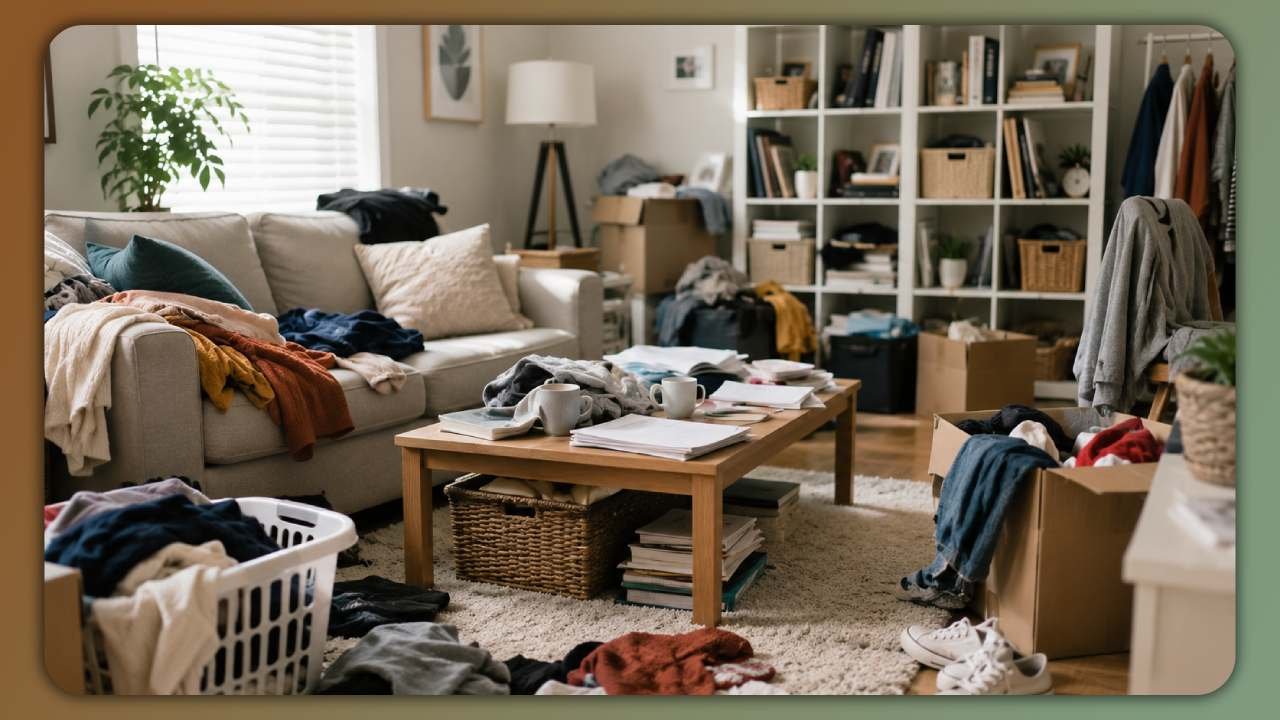
10 Signs You Need to Declutter Your Home in 2026 (And Where to Begin)
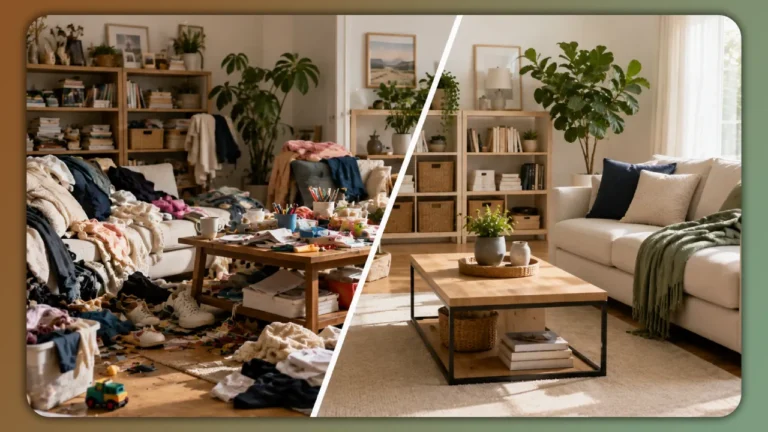
You need to declutter your home when clutter starts costing you time, money, or peace of mind. These 10 signs reveal exactly when clutter has crossed the line from normal life. It becomes a genuine problem worth fixing.
Clutter builds up slowly. You add one item at a time until drawers jam, counters disappear, and simple tasks take twice as long. Recognising these warning signs early stops small piles turning into overwhelming rooms that take entire weekends to fix.
This guide covers all 10 signs you need to declutter in detail, plus the exact steps to fix each one. A quick-reference table further down shows realistic timings for every room. Use it to plan your first session before you pick up a single box.
What Are the Signs You Need to Declutter Your Home in 2026?
Here are the 10 signs you need to declutter your home in 2026:
- You can’t find everyday items without searching
- Your cupboards and drawers won’t close
- You own duplicate items you forgot you had
- Cleaning one room takes more than 60 minutes
- You feel anxious before guests arrive
- You feel drained the moment you walk through the door
- You dread returning home after a trip
- Clutter has spread to the garage, shed, or car
- You buy items you already own
- You keep items you haven’t used in 12 months
Each sign points to a specific fix. The sections below explain why every sign appears, what causes it, and what to do about it today. Named examples, exact timings, and specific tools appear throughout, so you can act immediately rather than guess.
Clutter rarely arrives all at once. 3 habits cause most of the buildup: delayed decisions, sentimental attachment, and a “just in case” mindset. Delayed decisions happen when post or receipts sit down “for now.” They never get filed away properly. Sentimental attachment keeps items long after their usefulness has ended, because letting go feels like losing a memory. The “just in case” mindset stores broken chargers, spare screws, and old manuals for emergencies that rarely happen. It also drives people to keep spare carrier bags, boxes, and elastic bands well beyond any realistic future use. Understanding which habit drives your clutter makes the fix far more targeted. Households that name their specific habit before starting tend to finish faster. They stop repeating the same mistake in every room.
3 Physical Signs Your Storage Has Reached Its Limit
Physical clutter shows up first in storage spaces. Cupboards, drawers, and shelves reveal capacity problems before anything else does. They hide the overflow that surfaces later expose to visitors. These 3 signs confirm your storage has reached its limit.
Your Cupboards and Drawers Won’t Close
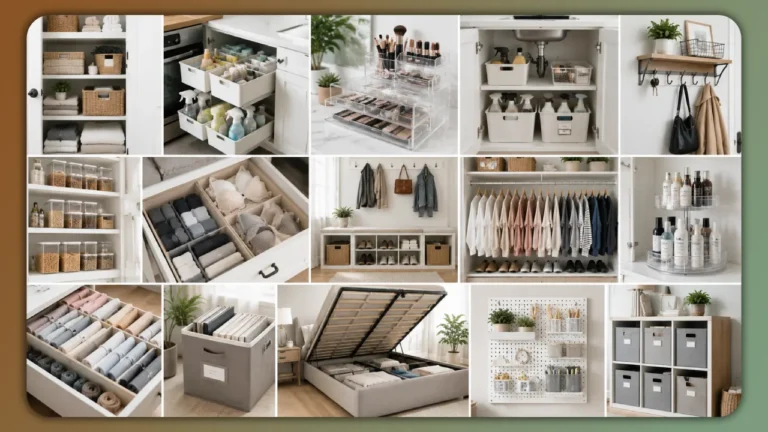
To fix a drawer that won’t close, remove every item and sort it into 3 piles: keep, donate, bin. A cupboard door that needs force to shut holds more items than its shelves can support safely. Standard kitchen drawers measure 15 inches (38cm) deep on average. Once contents exceed that depth, items jam against the frame every time you open it. Empty the drawer completely onto a table, then return only items you have used in the past 3 months. Wardrobe rails behave the same way. A rail built for 40 hangers that now holds 70 will sag and jam within weeks.
You Own Duplicate Items You Forgot You Had
Duplicate ownership signals a storage system that has broken down somewhere along the line. Common duplicates include scissors, phone chargers, tape measures, batteries, and kitchen spatulas. You buy a second pair of scissors because the first pair sits buried under 6 inches (15cm) of paperwork. That paperwork lives in a drawer you rarely open. Group similar items together in one clearly labelled location to spot duplicates immediately. A single “tools and fixings” box, for example, stops screwdrivers and tape from scattering across 3 or 4 different rooms.
Cleaning One Room Takes More Than 60 Minutes
A living room with minimal clutter takes 15 to 20 minutes to clean fully, per most professional cleaning schedules. Cleaning times above 60 minutes point directly to excess items, not excess dirt sitting on the surfaces. Every object on a surface adds handling time. You lift it, wipe underneath it, and then put it back down again. Removing 20 items from a single shelf can cut cleaning time by half within a single session. Ornaments, old candles, and unused picture frames are usually the first things worth removing.
3 Emotional Signs Clutter Is Affecting Your Wellbeing
Clutter affects mood and stress levels before it affects appearance in most households. These 3 signs show up in how you feel, not just how your home looks to visitors.
You Feel Anxious Before Guests Arrive
To reduce pre-guest anxiety, declutter 1 visible zone at a time, starting with the entryway table or hallway shelf. Panic-cleaning before visitors arrive is a direct signal. Your home doesn’t match the version you want people to see. Households that declutter monthly report lower pre-visit stress than households that only declutter twice a year. A designated “guest-ready” checklist for the hallway, sofa, and kitchen counter helps too. It can turn a 2-hour panic clean into a 20-minute tidy.
You Feel Drained the Moment You Walk Through the Door
Visual clutter forces your brain to process extra information every single time you enter a room. Researchers at Princeton University’s Neuroscience Institute found that clutter competes for attention. It reduces focus during ordinary daily tasks as a result. A hallway stacked with shoes, post, and bags creates that competition before you even sit down. Removing just 10 items from a single entryway can measurably reduce that initial feeling of overwhelm.
You Dread Returning Home After a Trip
Hotels and rental properties strip rooms down to essential furniture and a handful of decor pieces per surface. Coming home to overflowing surfaces after 3 or 4 days away highlights the contrast instantly and uncomfortably. This dread is not about the trip ending or missing the holiday itself. It’s about your home failing to offer the same calm your hotel room gave you.
4 Everyday Habits That Signal It’s Time to Declutter
Some signs you need to declutter show up in daily routines rather than in a single specific room. Watch for these 4 habits over the next 7 days to confirm the pattern.
You can’t find everyday items without searching through multiple drawers or bags. Losing keys, remotes, chargers, or scissors more than once a week means your storage system holds too many items. A simple fix involves assigning 1 fixed home for each of your 5 most-used items. Keys, wallet, glasses, and phone charger are the usual culprits here.
Clutter has spread to the garage, shed, or car boot rather than staying inside your main living space. Once overflow moves outside your home, storage capacity has been exceeded for some time already. Seasonal items are the most common culprits found piled in these overflow zones. Christmas decorations, camping gear, and garden furniture top that list every year.
You buy items you already own because you can’t locate the original one. Repurchasing tape, batteries, or cooking oil is one of the most expensive clutter habits. This costs UK households an average of 249 pounds a year, per a 2023 YouGov survey. Keeping a running list of pantry and toolbox staples on your phone prevents most of this repeat spending.
You keep items you haven’t used in 12 months despite having no plan to use them soon. Clothing, kitchen gadgets, and hobby supplies left untouched for a full year rarely get used again after that point. A 12-month test removes guesswork from keep-or-go decisions. It applies equally to sentimental items and purely practical ones.
How to Tell the Difference Between Mess and Clutter
Mess and clutter are not the same problem, even though people use the two words interchangeably. Mess is misplaced items that belong somewhere specific; clutter is excess items that don’t belong anywhere in your home. Confusing the two leads to endless tidying sessions that never actually fix the underlying issue.
A messy room returns to order in 15 minutes once everything gets put back into its designated place. A cluttered room stays disorganised even after tidying, because there isn’t enough storage for everything you own. If putting everything away still leaves surfaces full, you have a clutter problem, not a mess problem. Spotting these signs early prevents the two problems from combining into one much larger project later.
How to Begin Decluttering Your Home After Spotting the Signs
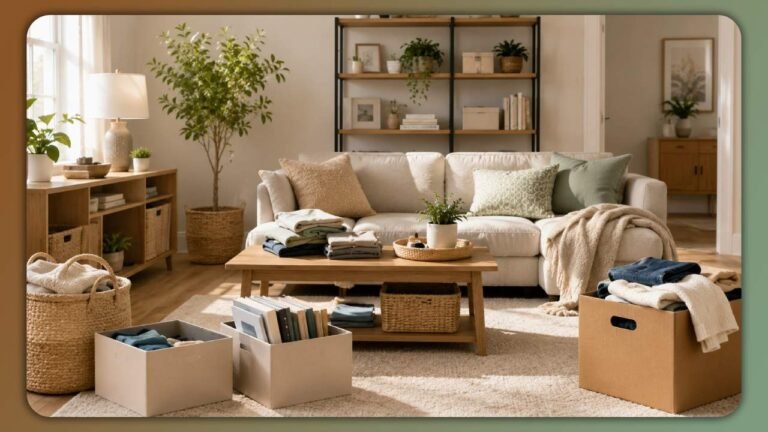
To begin decluttering your home, pick 1 small area and set a 20-minute timer. Move to the next zone only once the timer stops. Starting small prevents the overwhelm that stops most decluttering projects before they even finish. A junk drawer, a single shelf, or a car glovebox all make excellent starting points, because they have clear boundaries.
Spacekeep’s decluttering blog covers room-specific guides for every stage of this process. It runs from a single drawer through to a full house reset.
Where you send the donate and bin piles matters as much as the sorting itself. Most UK councils operate a Household Waste Recycling Centre (HWRC) that accepts furniture, electricals, and garden waste free of charge. Local charity shops accept clothing, books, and small furniture in resaleable condition. Many offer free collection for larger items like sofas. Freecycle and Facebook Marketplace groups work well for items that still have life left but won’t sell for much. Both platforms let you list an item in under 5 minutes and arrange same-week collection with a local buyer. Broken electricals need a dedicated recycling point rather than a general bin. Most contain materials that landfill sites can’t process safely.
How to Declutter One Room in Under 60 Minutes
To declutter one room in under 60 minutes, work through 4 stages: clear, sort, remove, reset. Clear every surface in the room into a single central pile first, without stopping to sort as you go. Sort that pile into keep, donate, and bin categories within 20 minutes. Use the 12-month rule for anything you hesitate over during this stage. Remove the donate and bin piles from the house immediately. Take them straight to your car boot or a nearby charity shop. Reset the room by returning only the keep items to labelled storage, with similar items grouped together.
How to Sort Items Into Keep, Donate, and Bin Piles
To sort items into keep, donate, and bin piles, apply the 12-month rule to every object you pick up. Keep items you have used in the past 12 months, or that hold genuine sentimental value. A wedding album or a child’s first shoes fall firmly into this category. Donate items in usable condition to a local charity shop. Alternatively, list them for sale on Vinted or Facebook Marketplace within the same week. Bin items that are broken, expired, or missing parts, rather than storing them “just in case” for another year.
Spacekeep’s room checklist walks through this process step by step for every room, including exact timings for each task.
Quick-Reference Decluttering Timeline by Room
The table below breaks down typical decluttering tasks by room. It includes realistic timing, method, and difficulty levels for UK and US households alike.
| Room | Task | Time Needed | Method | Difficulty |
| Kitchen | Clear counters, bin expired food | 45 minutes | Clear, sort, remove, reset | Easy |
| Bedroom | Sort clothing with the 12-month rule | 90 minutes | Keep, donate, bin | Medium |
| Bathroom | Check product expiry dates | 20 minutes | Bin expired, keep active | Easy |
| Living Room | Clear surfaces and shelves | 40 minutes | Clear, sort, remove, reset | Easy |
| Garage or Shed | Sort tools and seasonal items | 3 hours | Category sort | Hard |
| Home Office | Shred and file old paperwork | 60 minutes | Sort, shred, file | Medium |
Decluttering pace varies by household size and the number of years spent accumulating items in one property. A 2-bedroom flat lived in for 2 years typically needs 1 full weekend. That works out at roughly 10 to 12 hours split across 2 days. A 4-bedroom family house lived in for 10 years or more often needs 3 to 4 separate weekends. Tackling 1 room at a time avoids the burnout that stalls most large decluttering projects. Working through the quick-reference table above, room by room, keeps the total project manageable from start to finish. Households that skip straight to the hardest room, such as the garage, tend to lose motivation within the first hour.
Frequently Asked Questions About Signs You Need to Declutter
Is Decluttering the Same as Cleaning?
No. Decluttering removes excess items permanently, while cleaning removes dirt and dust from items you keep. A room can be spotlessly clean and still be badly cluttered at the same time.
How Often Should You Declutter Your Home?
Most organisers recommend a full declutter every 6 months, with a 15-minute check every week. Households with children or pets often need quarterly sessions, because clutter accumulates faster in those homes.
What Room Should You Declutter First?
Start with the room causing the most daily frustration, commonly the kitchen, bedroom, or entryway. Quick wins in a high-traffic area build motivation for larger projects later on.
Can Clutter Cause Stress?
Yes. Visual clutter raises cortisol levels and reduces focus, per research from Princeton University’s Neuroscience Institute. Reducing visible items lowers that stress response within a matter of days.
How Do You Declutter When You Feel Overwhelmed?
To declutter when you feel overwhelmed, set a 10-minute timer and tackle 1 drawer or shelf only. Small, timed sessions build momentum without triggering decision fatigue partway through. Stop the moment the timer ends, even if the drawer isn’t finished, and return to it the next day.
Start Fixing These Signs You Need to Declutter Today
Recognising the signs you need to declutter your home is the first step toward a calmer, more functional space. Address each sign with the specific fix outlined above. Start with the area that frustrates you most on a daily basis.
For a full walkthrough of every step, read Spacekeep’s bedroom decluttering guide and turn today’s clutter into clear space tomorrow.