Simple Home Systems: 10 Daily Routines That Work in 2026
Simple Home Systems are repeatable household routines that reduce clutter, missed tasks, and daily decisions. Start with a landing zone, a short evening reset, and a weekly plan before adding more routines.
You do not need expensive organisers or a strict timetable. You need clear locations, realistic timings, and household members who understand their jobs.
What Are Simple Home Systems and Why Do They Work?
Simple Home Systems give recurring household tasks a predictable place, time, and owner. For example, one tray holds keys, one calendar displays appointments, and one basket collects laundry. Simple Home Systems cut repeated searches, reminders, and everyday decisions.
What Makes a Household System Repeatable?
Simple Home Systems follow 4 parts: a trigger, a home base, an action, and a stopping point. A dinner trigger starts the kitchen reset. A cleaning caddy holds cloths and spray. A 10-minute timer marks the finish.
Which Daily Problem Should You Fix First?
Choose the problem that interrupts your day most often. Simple Home Systems solve specific, repeated interruptions. Track missed items, overflowing surfaces, or unfinished jobs for 3 days. Select 1 problem, rather than starting 10 projects. For example, misplaced keys signal an entryway problem. Unfolded clothes signal a laundry return problem.
How to Build Simple Home Systems That Last
To build Simple Home Systems that last, begin with one small routine and test the routine for 7 days. Use a paper checklist, phone reminder, or shared calendar.
How to Set a Trigger and Assign Responsibility
To set a trigger and assign responsibility, pair one action with an event you already follow. Empty lunch boxes after arriving home. Review tomorrow’s schedule after dinner. Assign a named person to each job. For shared chores, rotate names every Sunday.
How to Test a Routine Without Buying Storage
To test a routine without buying storage, reuse a tray, shoebox, basket, or notebook for 1 week. Count how often the routine works without reminders. Move the container closer to the activity if household members ignore the location. Buy permanent organisers only after you confirm the position and capacity. Simple Home Systems do not require new furniture.
1. How to Create an Entryway Drop Zone
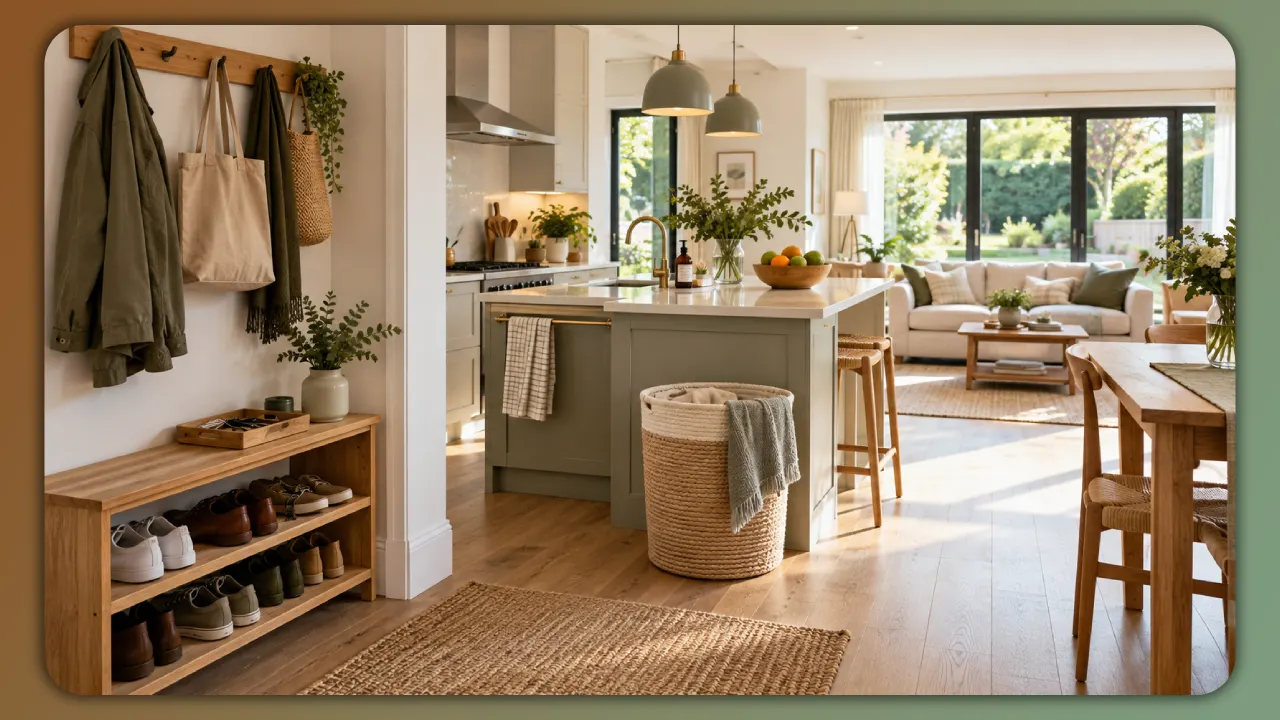
To create an entryway drop zone, group everyday departure items near the main door. Place keys in a shallow tray, hang bags on hooks, and line shoes inside a rack. Allow about 24 inches (60cm) of wall width for a compact setup. Keep the walking route and door swing clear. Simple Home Systems must preserve safe access.
How to Give Every Daily Item One Place
To give every daily item one place, select 3 fixed locations. Put keys and wallets in the tray, coats and bags on hooks, and shoes on the rack. Set a lower hook around 42 inches (107cm) high only where the child can reach safely.
How to Stop the Doorway Becoming a Storage Area
To stop the doorway becoming a storage area, remove yesterday’s post and unwanted packaging each evening. Put parcels, returns, and donations in a separate departure basket. Clear the basket during your next planned trip.
2. How to Organise a 10-Minute Evening Reset
To organise a 10-minute evening reset, choose the kitchen and living room as your 2 starting zones. Set a timer for 10 minutes after dinner. Return cups, put away toys, and clear the main counter. Stop when the timer ends, even when other rooms need attention.
How to Divide the Reset Across Household Members
To divide the reset across household members, assign 1 visible job to each person. One person loads dishes, another returns books, and another folds blankets. Adults should handle hot pans, chemicals, and sharp objects. Simple Home Systems should never shift unsafe jobs to children.
How to Keep the Reset Manageable on Busy Days
To keep the reset manageable on busy days, use a 3-minute minimum routine. Clear food, collect cups, and open the main walking route. Simple Home Systems need an achievable fallback for late workdays, illness, or unexpected visitors. A shorter routine keeps the habit active.
3. How to Set a Weekly Household Cleaning Schedule
To set a weekly household cleaning schedule, separate hygiene priorities from optional detail work. Wipe food-preparation surfaces after use, clean bathroom fixtures regularly, and vacuum high-traffic areas on a fixed day. Assign 15 minutes to each planned cleaning block. Adjust frequency for household size, pets, and actual mess rather than following a rigid calendar.
How to Divide Daily and Weekly Cleaning Jobs
To divide daily and weekly cleaning jobs, write 2 short checklists. Daily jobs include dishes, food spills, and rubbish. Weekly jobs include dusting shelves, cleaning mirrors, and changing bed linen. Keep a caddy with cloths, brushes, and suitable cleaners near the work area. Follow each product label and never mix cleaning chemicals. Simple Home Systems work without extra cleaning equipment.
How to Share a Cleaning Plan Fairly
To share a cleaning plan fairly, match tasks to ability, availability, and supervision needs. Rotate vacuuming, dusting, and emptying bins across available adults. Children can return toys or sort clean socks with guidance.
4. How to Build a Laundry Sorting and Return Routine
To build a laundry sorting and return routine, establish a route from hamper to wardrobe. Place 2 labelled hampers near changing areas: one for regular clothes and one for delicate items. Check care labels before mixing fabrics. Choose 2 washing days each week as a starting schedule. Finish the routine only after you put clean clothes away. Simple Home Systems include the final return step.
How to Prevent Clean Clothes From Piling Up
To prevent clean clothes from piling up, fold or hang each dry load before starting another. Give every person a named basket for returning clothing. Set a 15-minute folding block after the dryer or airer finishes.
How to Fit Laundry Into a Small Home
To fit laundry into a small home, use vertical sorting and compact drying equipment. Measure an available wall or storage nook before choosing an airer. For example, allow 24 inches (60cm) of shelf width for 2 narrow baskets.
5. How to Plan Meals and Groceries Once a Week
To plan meals and groceries once a week, select 5 reliable dinners and leave 2 evenings flexible. Check your fridge, freezer, and pantry before writing a shopping list. Group purchases into produce, proteins, grains, and household essentials. Keep the list on paper or in a shared phone app.
How to Create a Reusable Meal Rotation
To create a reusable meal rotation, choose meals your household already eats. For example, schedule pasta, roasted vegetables, soup, rice bowls, and baked potatoes. Repeat familiar meals with different ingredients rather than drafting 7 new recipes.
How to Connect Shopping With Food Storage
To connect shopping with food storage, group new purchases by intended use. Place frequently used ingredients on reachable shelves. Label frozen leftovers with the dish name and date. Follow local food safety guidance for storage times and temperatures.
6. How to Organise Household Paperwork and a Shared Calendar
To organise household paperwork and a shared calendar, create one collection point and one review time. Put incoming post, school letters, receipts, and appointment cards in a paper tray. Sort the tray for 10 minutes every Sunday. Enter dates immediately into a paper calendar or Google Calendar.
How to Sort Incoming Documents Into 3 Groups
To sort incoming documents into 3 groups, label folders Action, Keep, and Recycle. Put unpaid bills and unsigned forms under Action. File reference documents and instructions under Keep. Recycle unwanted leaflets after checking personal information. Shred documents containing sensitive details before disposal.
How to Make a Family Calendar Useful
To make a family calendar useful, record only dates that change household plans. Add appointments, work shifts, school events, and collection days. Review the next 7 days together each Sunday.
7. How to Set Up Essential-Supply Restocking Reminders
To set up essential-supply restocking reminders, choose 1 backup location for commonly used products. Group toilet paper, washing-up liquid, bin liners, and laundry detergent by purpose. Keep active supplies near use and unopened backups in one cupboard. Add an item to the shopping list when you open the last backup. Simple Home Systems make stock levels visible.
How to Choose a Simple Reorder Point
To choose a simple reorder point, count how many units your household uses between shopping trips. Start with 1 unopened backup for each essential item. Adjust the amount after 4 weekly reviews.
How to Avoid Duplicate Purchases
To avoid duplicate purchases, check the backup shelf before every shop. Label shelves for paper goods, laundry products, and bathroom supplies. Keep chemicals in their original containers and away from children and pets. Store food separately from cleaners.
8. How to Organise a Wardrobe and Seasonal Clothing Storage
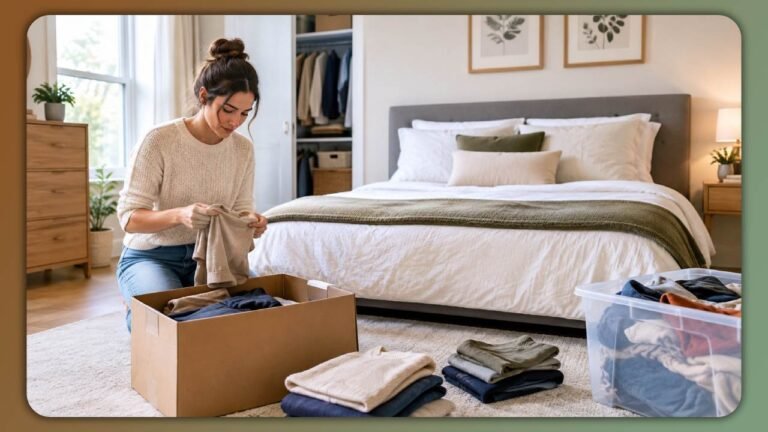
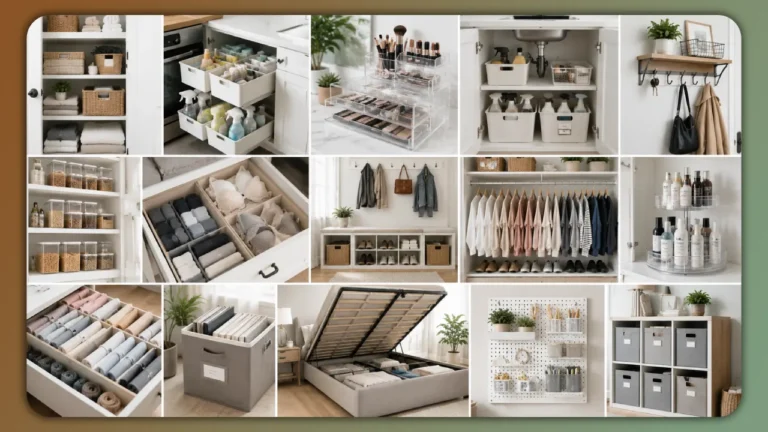
To organise a wardrobe and seasonal clothing storage, keep everyday clothes within reach and move occasional items higher. Start by sorting clothing into 3 groups: wear weekly, wear seasonally, and let go. Donate usable excess before buying dividers. Simple Home Systems begin with fewer items to manage. SpaceKeep’s small bedroom storage guide explains practical rails, hangers, shelves, and under-bed options.
How to Use Narrow Wardrobe Space
To use narrow wardrobe space, measure the inside width and depth before changing the layout. A standard hanging depth often needs around 24 inches (60cm). Label 2 small bins for accessories and off-season clothing.
How to Keep Seasonal Storage Easy to Retrieve
To keep seasonal storage easy to retrieve, place each clothing category in a breathable, labelled container. Review stored items at 2 seasonal changeovers each year. Simple Home Systems need regular seasonal checks. Keep frequently used clothes in the main wardrobe.
9. How to Prepare a Morning Launch Routine
To prepare a morning launch routine, do 3 tasks the night before: pack bags, choose clothes, and check tomorrow’s calendar. Put items needed for departure beside the entryway drop zone. In the morning, use the same sequence for breakfast, personal care, and leaving. Simple Home Systems reduce forgotten belongings without requiring anyone to wake earlier.
How to Make a 5-Minute Departure Checklist
To make a 5-minute departure checklist, list only items you regularly forget. Examples include keys, phone, wallet, water bottle, and school paperwork. Place the checklist at eye level beside the exit. Tick or read each item before opening the door.
How to Adjust the Routine for Different Schedules
To adjust the routine for different schedules, create separate departure times for each household member. Use one shared calendar to record unusual shifts, trips, and school activities. Keep work bags and school bags on different hooks. Review exceptions during the previous evening’s reset.
10. How to Schedule a Weekly Home Review
To schedule a weekly home review, reserve 20 minutes every Sunday for checking the next 7 days. Review cleaning jobs, laundry, planned meals, appointments, and supplies. Ask each household member to name 1 recurring difficulty. Simple Home Systems improve when everyone shares feedback. Change only 1 routine at a time.
How to Review a Routine That Keeps Failing
To review a routine that keeps failing, identify the exact missed action. Move the tools closer, shorten the job, or choose a better trigger. A lengthy checklist that nobody finishes signals an oversized task.
How to Record Progress Without Extra Administration
To record progress without extra administration, mark each successful day on one sheet. Compare patterns after 2 weeks rather than checking perfection each night. Simple Home Systems must remain manageable. Keep your tracking method shorter than the task itself.
Which Simple Home Systems Should You Start This Week?
Start with the entryway, evening reset, and weekly review. Those 3 Simple Home Systems cover lost belongings, visible clutter, and future planning. Use the quick-reference table to choose tasks that match your available time.
| Task | Timing | Method | Difficulty |
| Entryway drop zone | 15 min setup; 2 min daily | Tray, hooks, shoe rack | Easy |
| Evening home reset | 10 min daily | Shared timer and return baskets | Easy |
| Cleaning schedule | 15 min blocks weekly | Two task checklists | Moderate |
| Laundry return routine | 15 min per dry load | Named hampers and baskets | Moderate |
| Meal and grocery plan | 25 min weekly | Five dinners and one list | Moderate |
| Paperwork and calendar | 10 min weekly | Three folders and shared dates | Easy |
| Supply restocking | 5 min weekly | Backup shelf and reorder list | Easy |
| Wardrobe storage | 45 min setup; seasonal review | Sort, measure, label | Moderate |
| Morning departure | 5 min nightly | Bag check and visual list | Easy |
| Weekly home review | 20 min weekly | Review, assign, adjust | Easy |
Test your first 3 routines for 7 days. Add another system only after the first routines work with fewer reminders. For a home with heavy clutter, follow SpaceKeep’s guide to declutter rooms before rearranging storage. Removing unused belongings makes every return routine faster.
What Common Mistakes Make Home Routines Fail?
The biggest mistakes include buying storage too early, assigning vague responsibilities, and adding too many routines. Fix the cause before purchasing more equipment. A labelled container cannot help when household members never use the chosen location. A weekly plan fails when no one owns the actions. Simple Home Systems need visible rules and realistic limits.
Do not turn a skipped day into a restart. Return to the smallest useful action after disruption. Change an impractical schedule rather than abandoning household organisation altogether. Review crowded cupboards before adding baskets, shelves, or drawer units. A routine should save effort during an ordinary week, not work only on a perfect day.
Frequently Asked Questions About Simple Home Systems
Do Simple Home Systems Work in Small Flats?
Yes. Use wall hooks, shallow trays, folding hampers, and shared checklists. Measure available space before purchasing storage furniture. Keep doorways clear.
Can You Build Household Routines Without Spending Money?
Yes. Reuse boxes, trays, notebooks, and phone reminders. Test the routine for 7 days before buying anything.
How Many Home Routines Should You Start Together?
Start with 1 to 3 routines. Choose the busiest household problem first. Add a new routine after the earlier habits become reliable.
How Long Does a Daily Home Reset Take?
Allow 10 minutes. Spend the time returning everyday items and clearing high-use surfaces. Use a 3-minute fallback on busy evenings.
Should Every Household Member Follow the Same Schedule?
No. Give each person clear responsibilities and suitable timing. Keep one shared calendar while adapting individual routines for work or school.
How to Keep a Simpler Home Working Long Term
To keep a simpler home working long term, review the routines each week and remove steps that nobody needs. Simple Home Systems succeed through consistent, manageable actions, not expensive matching containers. Start with one room, assign clear jobs, and adjust the schedule after 7 days. For more realistic setup ideas, explore SpaceKeep’s practical home organisation ideas and choose one improvement you can complete today.