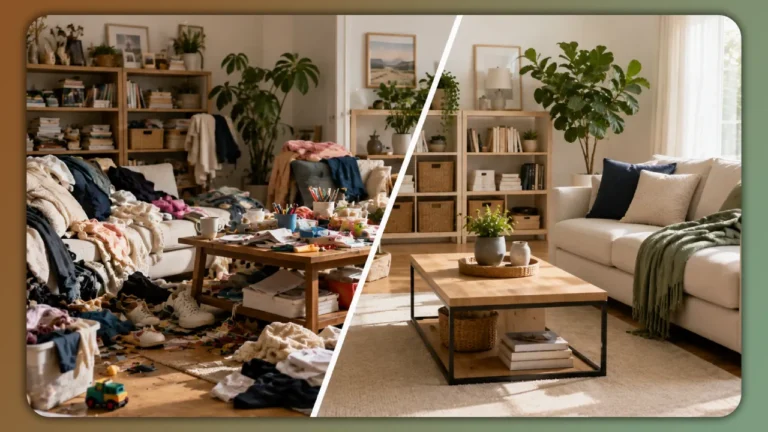

Where to Start Decluttering When You’re Overwhelmed
Start decluttering when overwhelmed by picking one small, visible spot and working there for 15 minutes before touching anything else. A cluttered house feels impossible to fix because the brain treats the whole home as one giant task. Break it into a single drawer, one countertop, or one shelf, and the job turns manageable. This guide covers exactly where to start decluttering when you’re overwhelmed, the order to tackle rooms in, and the decision rules that stop you from freezing at every item. The steps work for a UK terrace, a US suburban home, or a Canadian bungalow, because clutter follows the same patterns everywhere. By the end, you will have a clear, room-by-room plan and know how to stop the mess creeping back in 2026.
Why Clutter Feels So Overwhelming
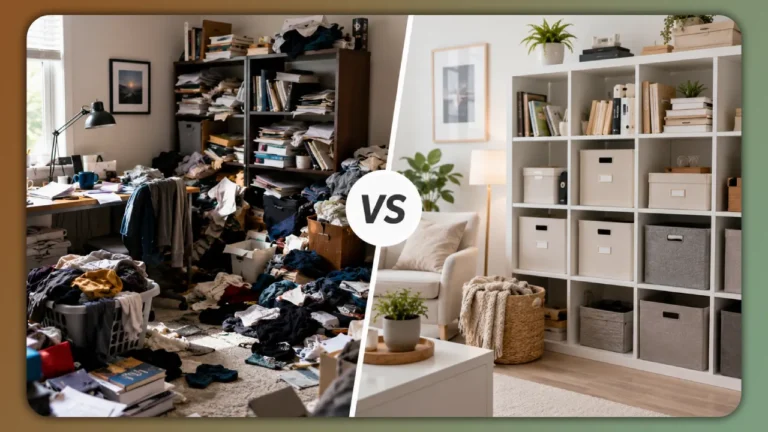
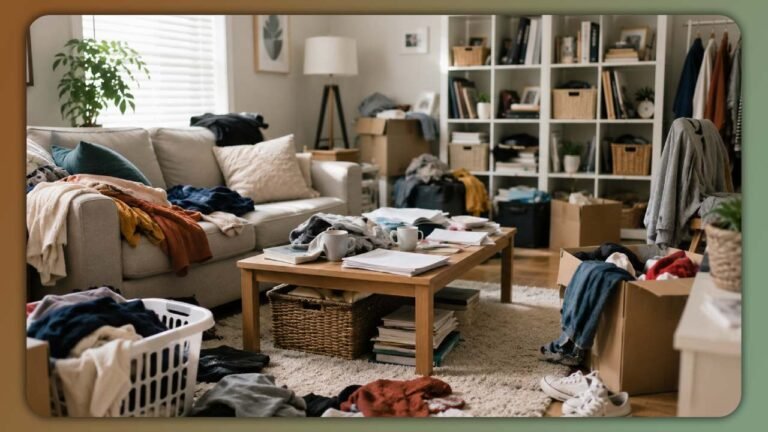
Clutter overwhelms because it forces the brain to process too many visual signals at once, which drains focus and raises stress. Princeton Neuroscience Institute research found that multiple objects competing for attention reduce the brain’s ability to concentrate and increase cognitive load. A related study, covered by Psychology Today, linked cluttered homes to higher cortisol, the body’s main stress hormone, particularly in women who carry most of the household mental load. Every pile of laundry, unopened post, or overflowing cupboard adds another item the brain tries to track. That constant background noise makes even small decisions feel exhausting. Understanding why the overwhelm happens makes it easier to work with the brain instead of against it.
How to Start Decluttering When You’re Overwhelmed
To start decluttering when overwhelmed, choose the smallest visible area in the home and set a timer for 15 minutes. Skip the cupboard, attic, or garage first. Visible surfaces give instant feedback, and instant feedback builds momentum for the harder rooms later.
Step 1: Pick One Small, Visible Zone
Choose a kitchen counter, a bedside table, or a single shelf. Avoid whole rooms on day one. A 60 cm by 60 cm surface, roughly 2 ft by 2 ft, is enough for a first session. Small zones remove the paralysis that comes from staring at an entire room.
Step 2: Set a Short Timer
Work for 15 to 20 minutes only, then stop, even if the space isn’t finished. Short sessions prevent the burnout that ends most decluttering attempts within a week. A kitchen timer, phone alarm, or oven clock all work equally well.
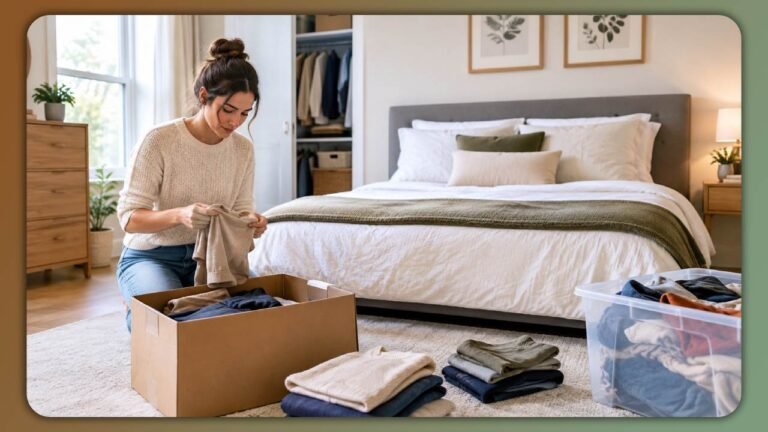
Step 3: Sort Into Three Boxes
Label three boxes: Keep, Donate, and Bin. Touch every item once and place it in a box immediately. Skip a fourth “maybe” pile on the first session, since indecision is what causes overwhelm in the first place. A fourth box can come later, once the habit feels natural.
Step 4: Finish the Zone Before Moving On
Complete the chosen space fully before starting another one. A half-finished counter and a half-finished drawer create two open tasks instead of one closed win, and open tasks are what drive the overwhelmed feeling in the first place.
The Best Order to Declutter a House Room by Room
The best order to declutter a house is entryway, kitchen, bathroom, bedroom, living room, then storage areas such as the garage or attic. This order moves from the highest-traffic, most visible spaces to the least visible ones, so confidence builds before harder decisions arrive.
- Entryway: coats, shoes, keys, and post trays.
- Kitchen counters and one cupboard: expired food, duplicate gadgets, chipped mugs.
- Bathroom cabinet: expired medicine, empty bottles, old makeup.
- Bedroom nightstand and one drawer: chargers, books, jewellery.
- Living room surfaces: remotes, magazines, toys.
- Home office or paperwork pile: bills, receipts, old statements.
- Garage, attic, or storage unit: seasonal items, boxes, spare furniture.
Following this sequence means every early win is visible to the whole household, which keeps motivation high through the harder, less visible spaces at the end of the list.
Simple Rules for Deciding What to Keep
Keep an item only if it is used, needed, or genuinely loved. Three questions settle most decisions in under 10 seconds:
- Has this item been used in the last 12 months?
- Is it needed for a legal, tax, or safety reason?
- Does it add real value to daily life right now?
If the answer to all three questions is no, remove the item. This rule prevents the common trap of keeping things “just in case,” which remains the single biggest driver of household clutter.
How to Declutter Large or Whole-House Overwhelm
For garages, attics, and whole-house overwhelm, remove the easiest and largest items first, then break the space into smaller sections. Large spaces need a different approach than a single drawer.
- Clear obvious rubbish and easy discards first, with no deliberation needed.
- Remove large items such as broken furniture, flat-pack boxes, and old appliances.
- Divide the remaining space into sections, such as one wall, one shelving unit, or one corner.
- Work through each section using the three-box method described above.
- Donate usable furniture and large items rather than binning them, since most UK, US, and Canadian councils charge for bulky waste collection.
If the space still feels too large after four sessions, book two or three short sessions a week instead of one long one. Consistency beats intensity for whole-house resets, and shorter sessions are far easier to sustain over a busy month.
Common Mistakes That Make Overwhelm Worse
Five habits turn a manageable decluttering project into an overwhelming one:
- Trying to clear the whole house in a single weekend instead of working in short, repeatable sessions.
- Buying storage bins and boxes before sorting, which adds clutter rather than removing it.
- Starting in the garage or attic first, where progress is slow and hard to see.
- Building a large “maybe” pile with no review date, so it grows instead of shrinking.
- Letting donation bags sit by the door for weeks, which turns them into new clutter.
Avoiding these five habits keeps momentum steady and stops a decluttering project from stalling halfway through.
How to Keep Your Home Clutter-Free After Decluttering
Maintain a clutter-free home with a one-in-one-out rule and a weekly 20-minute reset. Decluttering once solves the current mess. Habits stop the mess from returning.
- Apply a one-in-one-out rule: every new item that enters the home replaces one that leaves.
- Block 20 minutes every Sunday to reset one zone, such as the entryway or kitchen counter.
- Deal with post, packaging, and school papers on the same day they arrive.
- Store items where they get used, not simply where they fit.
- Review the “maybe” box every 90 days and remove anything that stayed untouched.
Storage Tools That Support Decluttering
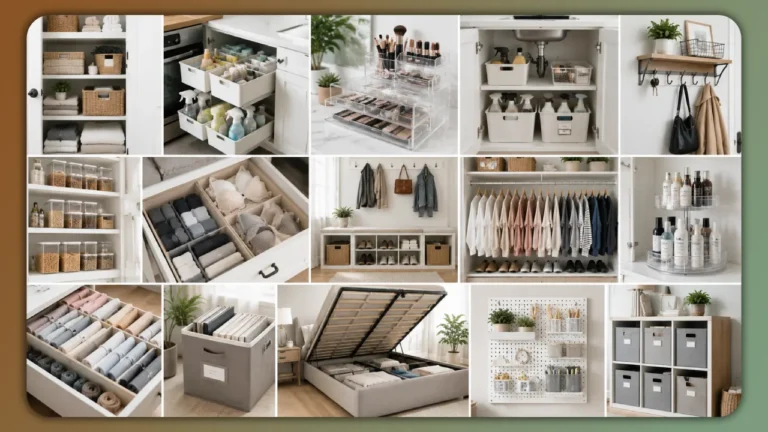
Storage should contain what is left after decluttering, not hide clutter that still needs sorting. Buying bins before decluttering usually adds more clutter, not less.
Four low-cost tools help once the keep pile is final:
- Clear, labelled bins for categories such as toiletries or stationery.
- Drawer dividers for kitchen utensils, socks, or cosmetics.
- Under-bed storage boxes for seasonal clothing.
- Wall hooks near the entryway for coats, bags, and keys.
Measure the space before buying any container, whether the size is listed in litres, gallons, inches, or centimetres. A box that doesn’t fit the shelf becomes new clutter within a week.
Get More Decluttering and Organisation Help
This step-by-step method works for a single overwhelmed room or an entire home reset. For more room-by-room guides, visit the Space Keep blog. To learn more about the approach behind these guides, read the About Us page, or get in touch with any decluttering questions specific to your home.
Frequently Asked Questions
Where should I start decluttering when I feel overwhelmed?
Start with one small, visible area, such as a kitchen counter or a single drawer, and work for 15 minutes. Visible progress builds the motivation needed to tackle larger spaces later.
Is it better to declutter room by room or by category?
Room by room works best for overwhelmed homes, since it delivers visible wins faster than sorting one category across the whole house. Category-based decluttering, such as clearing every book in the house at once, suits smaller collections later in the process.
How long does it take to declutter an overwhelmed home?
Most homes take 4 to 8 weekly sessions of 20 to 30 minutes to reach a manageable state, depending on the size of the property and the volume of items. A three-bedroom house with years of accumulated items typically needs 6 to 10 sessions.
Do I need to buy storage containers before I start decluttering?
No, buying storage before decluttering usually adds clutter instead of reducing it. Sort items into keep, donate, and bin first, then measure the remaining space before buying any containers.
How do I declutter without feeling guilty about getting rid of gifts?
Separate the gift from the giver’s intention, since the sentiment was already received the moment the gift was given. Keeping an unused item out of guilt adds stress without honouring the relationship behind it.
Can decluttering actually reduce stress and anxiety?
Yes, research from Princeton Neuroscience Institute and studies covered by Psychology Today link cluttered homes to higher cortisol, poorer focus, and increased anxiety. Reducing visual clutter lowers the number of decisions the brain processes each day.
How often should I declutter to stop the overwhelm coming back?
Declutter little and often, with one 20-minute session every week, rather than one large session every year. Weekly maintenance prevents the backlog that causes overwhelm in the first place.